Back to Projects
Project 07 / 15

Project 07 · Game

Ninja Kunai

A 10M+ download ninja hit rebuilt as a white-label template, then remade as a sketchbook drawn in ink.

  • Hyper-Casual
  • Mobile
  • Art Direction
  • VFX
Genre:
Hyper-Casual Action
Scope:
Project Lead · Level Design · Art Direction · VFX & Animation
Development Time:
1 Year
Team Size:
5
Tools:
Unity · Blender · UMotion
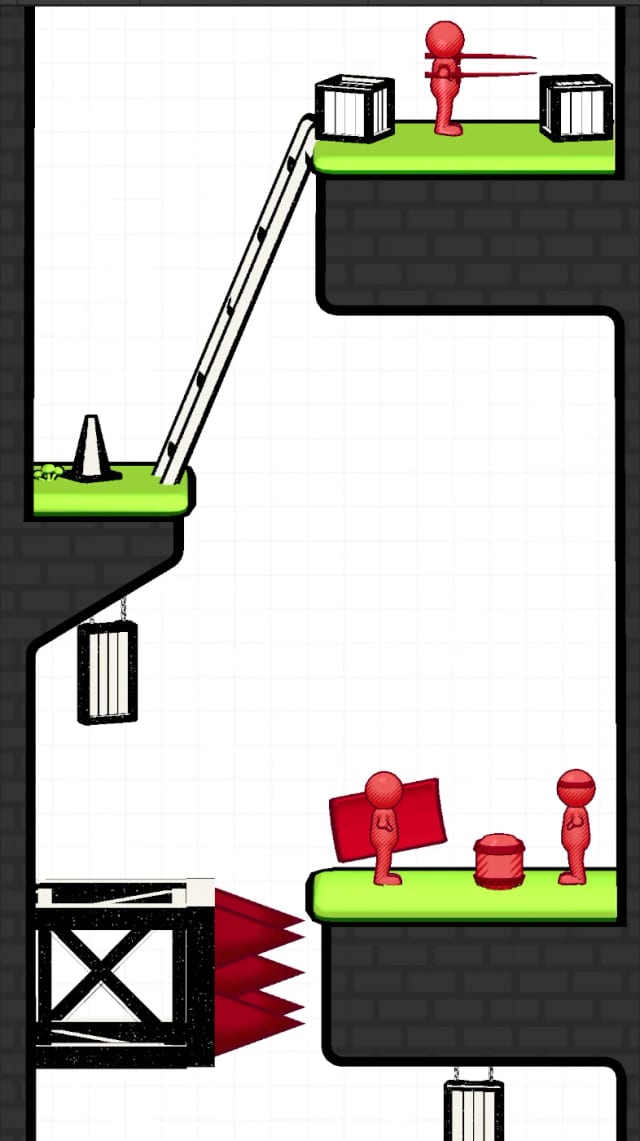
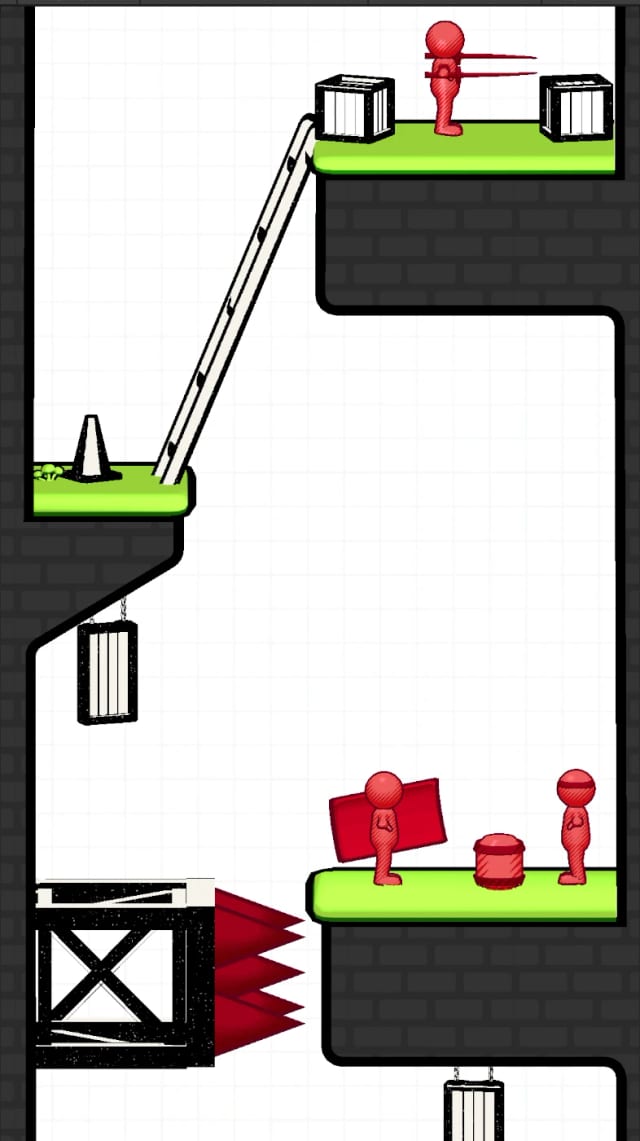
A vertical sketchbook level with red enemies on green platforms, crates, a ladder and red spikes

Project Resume

Project resume

01

Overview

A hyper-casual ninja game where players throw a kunai and teleport to it, rebuilt from a 10M+ download hit into a white-label template, then remade as a sketchbook.

  • Platform Mobile
  • Team Size 5
  • Duration 1 Year
  • Engine Unity

Key Features

  • Throw a kunai and teleport to the exact spot where it lands
  • 100 vertical levels with a boss every ten
  • Ragdoll enemies and breakable scenery
  • A white-label template built to swap every asset
  • Rarity shown by auras, trails and accessories
  • A sketchbook remake with its own shaders

My Role

Project Lead & Art Director

Led the project for a year, rebuilt the game and its 100 levels, built the white-label template and art-directed the sketchbook remake.

  • Led the project and four programmers
  • Rebuilt all 100 levels by hand
  • Made the 3D, animation and VFX
  • Reverse Engineering
  • Level Design
  • Art Direction
  • VFX
  • 3D & Animation
  • Team Lead
02

Design Brief

A publisher hired the studio to reverse engineer a hyper-casual ninja hit with more than 10 million downloads into a white label, a templated base to release several games with the same structure. The first version had to be identical to the original, and the next was a sketchbook remake. I led the project for a year, from the 100 levels and every asset to the art, while four programmers rotated through it.

Constraints

  • Identical firstThe first version had to match the original.
  • A white labelCharacters, weapons and effects had to swap.
  • Then a remakeThe same base then became a sketchbook game.
  • A rotating teamFour programmers rotated through the project in a year.
03

Design Goal

The rebuild had to feel exactly like the original, from the kunai throw and the teleport to the ragdolls and the way the scenery breaks, matched side by side. Underneath, the project had to work as a template where any model or effect could be swapped. The remake then had to give the same rules a look of its own, simple enough for hyper-casual.

From the original to a new game

Rebuild. Swap. Remake.

  1. RebuildMatch every mechanic, asset and level.
  2. SwapMake every asset easy to swap.
  3. RemakeRedraw the same rules as a sketchbook.

Player Experience Pillars

  • IdenticalPlays exactly like the original.
  • PhysicalRagdolls that keep momentum.
  • SwappableOne swap for any model.
  • Rarity you seeAuras, trails and accessories.
  • A look of its ownA sketchbook drawn in ink.
04

Design Solution

I recreated every asset, texture and screen of the original, built all 100 levels by hand by laying the original over each one, and tuned the throw, the teleport, the ragdolls and the breakable scenery until they matched it. I built the template myself, so characters, weapons and effects swap in one step. For the remake I made about ten looks before the sketchbook, gave rarity new forms through accessories and VFX, and led the team through it all.

Key Design Choices

  • 100 levels by handLaid the original over every level and placed each object in the same spot, bosses included.
  • Physics that matchTuned the throw, the teleport and the ragdolls side by side with the original until they felt the same.
  • A swap templateBuilt prefabs where skins, weapons and VFX swap automatically, ready for a new game.
  • Rarity you seeMore VFX at every rarity, from the dash trails and the auras to whole new bodies.
  • Ten looksMade about ten looks for the remake before the sketchbook drawn in ink was approved.
05

World & Visual Identity

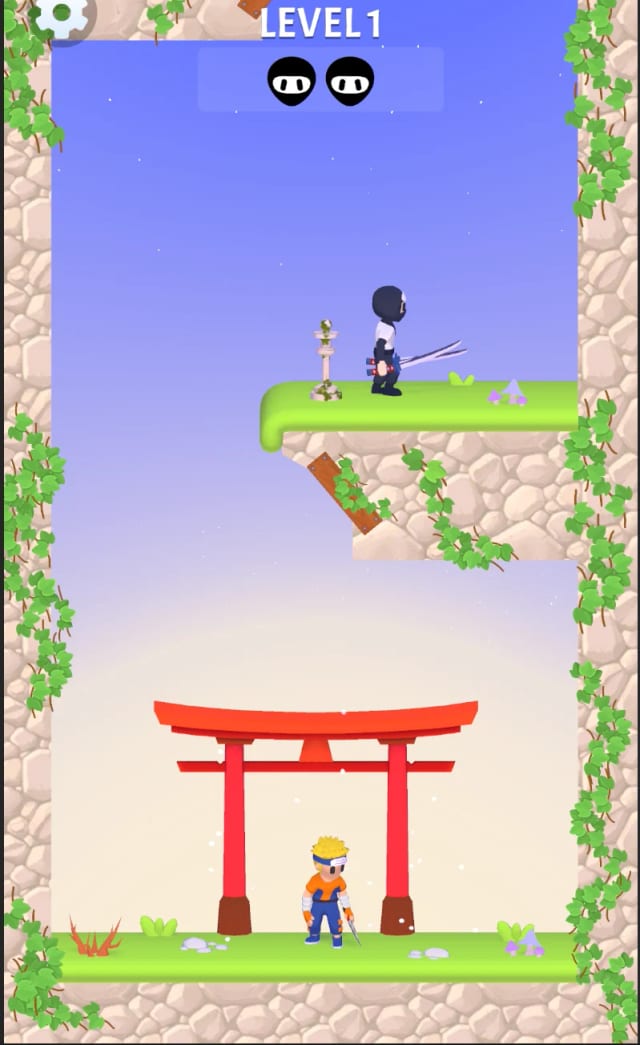
Vertical levels that fit a phone screen, with 2D backdrops behind 3D platforms, enemies and breakable scenery. In the remake the same world is redrawn as a sketchbook, with round, simple characters, ink on the walls and weapons that look drawn by hand.

Visual Principles

  • Vertical levelsEach level fits one phone screen.
  • 2D and 3D3D action on 2D backdrops.
  • RagdollsEvery enemy falls like a real body.
  • SketchbookWeapons drawn in pen and ink.
  • LegendariesRobots, parodies and creatures.
06

Results & Learnings

Results

  • An identical rebuildRebuilt the game with every asset, all 100 levels and its bosses matching the original, and the publisher approved it after rounds of feedback.
  • A sketchbook remakeArt-directed the remake from about ten looks to a sketchbook, with new shaders, ink VFX, drawn weapons and rarity told through accessories.
  • A year of leadingLed the project for a year, onboarding four programmers as they rotated and running the meetings, the Trello and the schedule to deliver on time.

Learnings

  • Feel is in the physicsMatching the original showed that the feel of a game lives in its physics, in how a ragdoll swings and how a kunai pulls the body after it.
  • Build to be swappedMaking the project a template from the first day made the remake possible, since a new look meant swapping assets and keeping every rule.
  • Leading is knowingKnowing the whole project made me its leader, and this was the first game where I ran the team and the schedule as well as the whole design.

Media

The work, up close

Project gallery · 8
A vertical sketchbook level with red enemies on green platforms, crates, a ladder and red spikes

A sketchbook level

A vertical level of the remake, drawn in pen and ink with enemies, crates and spikes.

Roles

Roles & Responsibilities

Leadership

  • Led the project for a year as the one who knew all of it
  • Onboarded the four programmers who rotated through it
  • Ran the meetings, the Trello and the project schedule
  • Took the rebuild through feedback until it was approved

Rebuild & Levels

  • Recreated every asset, texture and screen of the original
  • Built all 100 levels by laying the original over each one
  • Matched every boss of the game to the original
  • Built the prefab system that every asset of the white label swaps on

Feel & VFX

  • Tuned the throw, the teleport and the ragdolls by testing
  • Iterated on the physics and explosions of breakables
  • Made the dash trails and auras that grow with rarity
  • Drew VFX concepts and turned the blood into ink

Art & Animation

  • Made about ten looks before the sketchbook was approved
  • Created the shaders and drew every new weapon
  • Designed rarity through accessories and new bodies
  • Modeled and animated every character of the game

Full Case Study

Ninja Kunai Case Study

Core Loop

  1. Aim the kunai
  2. Throw it
  3. Teleport to it
  4. Clear the level

Every level is one vertical screen full of enemies, and the goal is to take down all of them. Players tap to aim, an arrow shows where the kunai will fly, and the ninja throws it. A second tap teleports the ninja to the kunai, and the body swings with the force of the jump as it lands. Breaking the scenery on the way pays money that unlocks new characters, and every tenth level ends with a boss.

Rebuild & White Label

Feature Introduction

An identical rebuild

A publisher wanted the game rebuilt as a white label, a templated base for several games, and the first version had to be identical to the original, so the rebuild was the proof that the new base could carry a 10M+ download hit.

I recreated every asset of the original, its 2D backdrops, UI and textures, and modeled the 3D scenery. The game puts 3D platforms, enemies and breakable objects in front of 2D backdrops, in vertical levels that fit a single phone screen, so every level reads at once, from the bottom of the screen to the very top of it.

I built all 100 levels by hand, laying the original over each one and placing every object in the same spot, and made sure the boss that closes every ten levels worked exactly like the original, since the experience had to stay the same.

Design Principles

  • Recreate every asset, texture and screen of the original, so the rebuild looks identical at first sight to anyone who played the 10M+ download hit
  • Place every object of the 100 levels where the original had it, so each level plays exactly like the one players knew, down to the last enemy on the screen
  • Make every boss work like the original, so the fight that closes every ten levels keeps the same challenge as before, with the same attacks and rhythm
  • Keep the 2D backdrops and the 3D action of the original, so the game still reads clearly in one vertical screen, as clearly as the original it was rebuilt from

Feature Introduction

A white label built to swap

The main goal was a templated skeleton of the game, where any character, weapon or effect could be replaced without touching the rules, so a single game could become many new games for the publisher with very little extra work each time.

I designed the prefab system so characters change their skin automatically, and the 3D model and the VFX of each weapon swap in one step. The whole game was built as a template, so every new game for the publisher could start from a working, tested base instead of an empty project, with all of its rules already in place.

I built the substitution system myself, defining what had to be swappable and testing it on every character, weapon and effect, so the white label held up later, when the sketchbook remake replaced every asset and the rules never changed.

Design Principles

  • Build the whole game as a template, so a new game means new assets placed on the same rules and the same levels, with no new code to write
  • Make characters swap their skin automatically, so adding a new character means adding a new model and nothing more, ready for the next game
  • Let every weapon swap its 3D model and its VFX in one step, so the shop can keep growing with new weapons without any change to the code behind it
  • Prove the template with a real remake, so the white label shows it works before the publisher reuses it for more games with the same structure and rules

Behind the Feature

How the white label was built

01 Swap SystemPrefab template · Automatic skins · Weapon model and VFX · Tested swaps

Goal

One game that becomes many

  • Swap any character, weapon or effect without touching the rules of the game
  • Let a new game start from a working, tested base with all its rules in place
  • Add new characters and weapons to the shop with no change to the code

Constraints

Swaps must never break the rules

  • Keep all 100 levels and every boss playing the same after any asset swap
  • Stay clear to the programmers who rotated in and out of the project all year
  • Hold up under a full remake, when every single asset of the game is replaced

Process

  1. What must swap I listed what had to be swappable, characters, weapons and effects, and kept each one apart from the rules, so a swap only touches assets, a list the rotating programmers could follow.
  2. Adapted to one rig All characters share one rig and one set of animations, so I adapted each new model to that rig and the prefab swaps its skin on its own, with no new animation.
  3. Weapons in one step Each weapon swaps its 3D model and its VFX in a single step, so the shop can keep growing with new weapons while the code behind every throw stays the same.
  4. Tested on everything I ran the substitution on every character, weapon and effect and played the levels after each swap, so the template was proven before the remake replaced every asset.

The decision that made it work

Separate the assets from the rules

Keeping every swappable piece apart from the rules made the game a template, so a new game is new assets placed on the same levels and the same code. The publisher could reuse a tested base for more games with little work.

Result

The template survived a full remake

The sketchbook remake replaced every character, weapon and effect while the rules, the 100 levels and the bosses never changed, which proved the white label worked before the publisher reused it for other games.

Impact

What the rebuild kept for players

  • Same Game

    Every asset, rule and level matched the original, so players who knew it found the same game in their hands.

  • Same Levels

    Every object sits where the original had it, so each level asks for the same moves and keeps the same difficulty.

  • Same Feel

    The throw, the teleport and the ragdolls were tuned to the original, so every jump and hit lands with the same weight.

  • A New Drawn Look

    The remake changed every asset on the same template, so players met a drawn world that still threw and teleported like the hit.

Design Iterations

01 Throw & TeleportA throw that felt the same

01 Throw & Teleport

Problem

The throw did not feel like the original

The kunai throw and the teleport are the whole game, and any difference in how the kunai flew or how the ninja arrived made the rebuild feel like a different game to anyone who knew the original.

Cause

Feel lives in small values

How fast the kunai flies, where it lands and how the ninja arrives only read right when compared in motion with the original.

Solution

Tuned them side by side with the original

In a remake, feel is the specification. The only reliable reference was the original in motion, so the values were tuned against it, side by side, until no difference was left in the hand of someone who knew the original well.

  • Play the original and the rebuild side by side, comparing them in motion
  • Tune the kunai throw and the teleport with the programmers over many tests
  • Keep tuning until both felt exactly like the original in the player's own hand

Result

A throw that felt the same

The rebuild earned the trust of the players of the original on its very first move. With the core action matching, every later change in the remake could be judged against a mechanic that already felt right to them.

  • The kunai throw felt exactly the same as it did in the original game
  • The teleport landed exactly as players of the original expected it
  • The rest of the rebuild grew on a mechanic that already felt right
02 RagdollsDeaths that feel physical

02 Ragdolls

Problem

Bodies had to fall like the original

Every enemy and the ninja itself die as ragdolls, and the original made them swing and fall in a realistic way that sells every hit and every death in the level.

Cause

Ragdolls must keep their momentum

The physics keeps the force of each move, so a body that catches a kunai or dies in the air has to swing with that force before it falls.

Solution

Iterated on the ragdolls many times

The bodies carry the weight of every hit, so they were tuned as part of the feel of combat, with each swing and fall keeping the force of the move that caused it, until every one of them matched the falls of the original.

  • Tune the ragdolls of every enemy and of the ninja itself over many rounds
  • Keep the momentum of each hit in how the bodies swing, fall and come apart
  • Match the realistic falls and the swings of the original game in every level

Result

Deaths that feel physical

Physics became part of the feedback. Each hit got a reaction that confirms it with no extra effect, and the small bodies gave the remake the same playful, physical identity that players loved in the original.

  • Each death in a level felt physical, sold by a realistic ragdoll
  • The ninja swung as it caught the kunai, as a real little body would
  • Every throw and every hit got a physical reaction players could see
03 Breaking the SceneryBreaks worth chasing

03 Breaking the Scenery

Problem

The scenery had to break better

Breakable decorations make players feel like a ninja destroying everything and pay money to unlock characters, so a weak or ugly break wasted both the fantasy and the reward behind every level.

Cause

Breaks read through physics and effects

How the pieces fly and how the explosion looks decide whether a break feels strong, and both depend on the physics and the VFX together.

Solution

Iterated on the physics and the explosions

Breaking things is both the fantasy and the economy of the game, so it had to look strong. The physics and the explosions were tuned together, since one decides how the pieces fly and the other whether a break feels powerful.

  • Prepare every breakable object of the scenery in Blender for the game
  • Tune the physics of each break until the pieces came apart as in the original
  • Polish the explosions until every break looked more beautiful on screen

Result

Breaks worth chasing

The scenery became a reward loop of its own. Breaking it feels good and it pays, so players had a reason to explore and destroy every corner of a level on their way to its end, saving for the next character they wanted.

  • Breaking the scenery became a satisfying part of each level played
  • The ninja fantasy grew stronger with every object that players broke
  • Every break paid money that players spent unlocking new characters
04 Dash TrailsRarity in every move

04 Dash Trails

Goal

Match the dash trails of the original

In the rebuild, the teleport had to look exactly like the hit, and its dash trails, themed to each character and stronger at every rarity, were part of that look.

Approach

Iterated on the dash side by side

Played our dash next to the original and iterated on the VFX of each trail until the two looked as close as possible on every character of the game.

Solution

Made a themed trail for every rarity

The most repeated move of the game became the place to show what a character is worth. Each trail follows the theme of its character and grows with rarity, so progression shows in every single teleport a player makes.

  • Give every dash a trail of its own, themed to each character of the game
  • Make the trail plainer at the lowest rarity and more powerful at every tier up
  • Compare every trail with the original until the two looked the same

Result

Rarity in every move

Unlocking a rarer character gained a reward players see on every move they make, which gave the rarity system a reason to exist far beyond a label in the shop and made each new character worth the coins spent on it.

  • The teleport, the move repeated most, gained a real sense of speed
  • Every dash showed the rarity of the character that made it on screen
  • Rarer characters became worth unlocking for their stronger trails

Sketchbook Remake

Feature Introduction

From a copy to a sketchbook

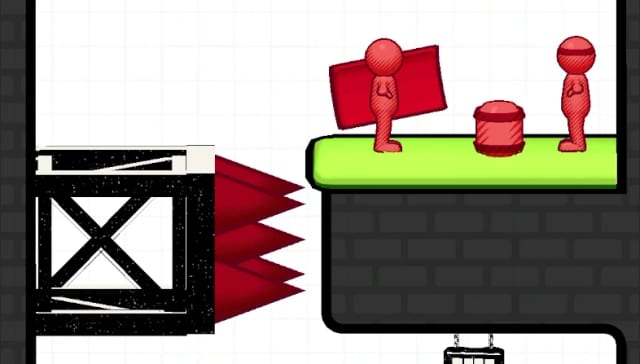
Red sketchbook enemies on a green platform beside red spikes, drawn in pen and ink

After the publisher approved the rebuild, the game needed a look of its own. I made a concept for a new color system and about ten different looks for the game before the sketchbook style was finally approved for the remake.

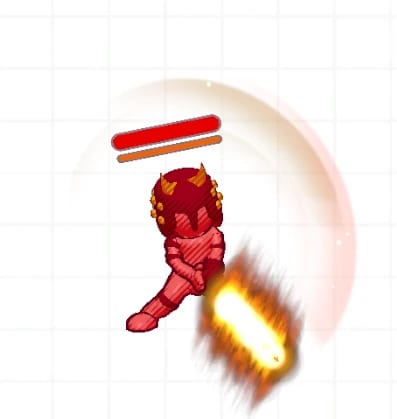
I created new shaders and searched for others that fit the look, remade the materials, the lighting and the post-processing, and drew every new weapon with the sketchbook shaders, so each one looks like a drawing on the page and the whole game feels like it lives inside the pages of a notebook full of ink and pencil.

The final look mixes the sketchbook with round, simple characters made for hyper-casual. I made new VFX that behave like ink, so blood became ink marked on the walls, and a new UI that matches the drawn world on every screen.

Design Principles

  • Try many looks on the real game before choosing, so the remake is approved on what players will actually see, after about ten looks tested in the game
  • Keep the look simple enough for hyper-casual, so the drawn style reads at once on the small screen of a phone, even with ragdolls and ink flying in a fight
  • Draw every weapon with the sketchbook shaders, so the shop shows weapons that belong to the same drawn page as the levels and the ninjas
  • Turn every effect into ink, so each hit leaves a mark on the walls that fits the drawn sketchbook world around it and stays there as the fight goes on

Behind the Feature

How the new look was chosen

01 Ten Looks to OneColor system · About ten looks · Sketchbook shaders · Ink VFX

Goal

Give the remake a look of its own

  • Try the looks on the real game, so approval comes from what players will see
  • Keep the drawn style simple enough to read at once on a small phone screen
  • Make weapons, effects and UI belong to the same drawn page as the levels

Constraints

Same rules, a whole new style

  • Change the look of the game without touching a single rule or level of it
  • Keep ragdolls and flying ink readable in the middle of every fast fight
  • Fit the round and simple characters that hyper-casual players already expect

Process

  1. A new color system I started from a concept for a new color system, then built about ten different looks inside the real game, so each one was judged while playing the levels, with ragdolls and ink on screen.
  2. Sketchbook shaders Once the sketchbook style was approved, I created new shaders and searched for others that fit, and remade the materials, the lighting and the post-processing.
  3. Weapons drawn in shader Every new weapon was drawn with the sketchbook shaders, so each one looks like a drawing on the page and the shop shows items from the same notebook world.
  4. Effects become ink New VFX behave like ink, so blood became ink marked on the walls, and a new UI matched the drawn world on every screen, from the levels and the HUD to the menus of the shop.

The decision that made it work

Judge each look inside the real game

Building about ten looks on the playable game, with its ragdolls and fast fights, showed which styles still read on a phone. The sketchbook was approved on what players would actually see, which kept the remake clear.

Result

A remake that looks like a notebook

The game moved from a copy of the original to a sketchbook world of ink and pencil, with weapons, effects and screens drawn in the same style, while the round characters kept it readable as a hyper-casual.

Feature Introduction

Rarity players can see

In the rebuild, rarity came from the characters themselves, their 3D models, auras and visual effects, and from the trail left behind by every dash, so a rare character showed its rank in motion every time it crossed the screen.

In the remake every character shares the same round body, so I designed rarity through accessories. The first rank has none, the second adds accessories like a bracelet or a crown, and the third adds changes to the body as well, so players can read the rank of any character at a glance, even in the middle of a level.

The legendary rank breaks the body itself, with robots, parodies and very different creatures covered in VFX that match their theme. I modeled and animated every character, and each rank shows more than the one below it, so the next rank up is always something players can see clearly, and something they want to unlock.

Design Principles

  • Make rarity visible on the character itself, so players see what a rarer one is worth before they unlock it with the money they break out of the levels
  • Add more to each rank than to the last, from accessories to new body parts, so progress reads at a glance, from the most common ninja to the rarest one
  • Give the legendaries a body of their own, so the top rank feels like a whole new character worth saving up to unlock with the money of many levels
  • Match the VFX of every character to its theme, so the effects tell its story as much as its 3D model and animation do, in every dash, throw and hit of a level

Impact

How rarity changes what players want

  • Visible Value

    Each rank adds accessories, body changes or a whole new body, so players judge what a character is worth at a glance.

  • Worth Collecting

    The jump from a plain body to a robot or a creature gives players a clear goal to chase with the money they break.

  • Rarity in Motion

    Auras and dash trails grow with rarity, so rare characters show their value in every teleport across the level.

  • Bodies that Move

    Every character moves with its own animation, so players see the rank they unlocked come alive in every level they play.

Leading the Team

Feature Introduction

Leading the project for a year

I was the one who stayed on the project the longest and knew all of it, so I onboarded each of the four programmers who rotated through it during the year, and the project never lost what it had learned when someone left the team.

Some programmers could not deliver and were replaced, so I coordinated every new one, ran the meetings where the team learned what to build, and kept the Trello, the organization and the schedule, so the project could still deliver on time while the people building it kept changing around me from one month to the next.

I took the rebuild through rounds of feedback with the publisher until it was approved, then led the same project into the sketchbook remake, keeping it moving through every change in the team, from the first level to the new look.

How I Led

  • Onboard every programmer myself, so a change in the team never stops the project or loses what was decided, over a whole year with four programmers
  • Run every meeting on what to build, so the team always knows the next step and why it matters to the game, even as programmers rotated in and out
  • Keep the Trello and the schedule up to date, so the project meets every deadline agreed with the publisher, through every change in the team
  • Guide the programmers on what each system must do, and let them choose the technical way to build it, since that part of the work was their craft

Development

Development

Levels, Art & VFX

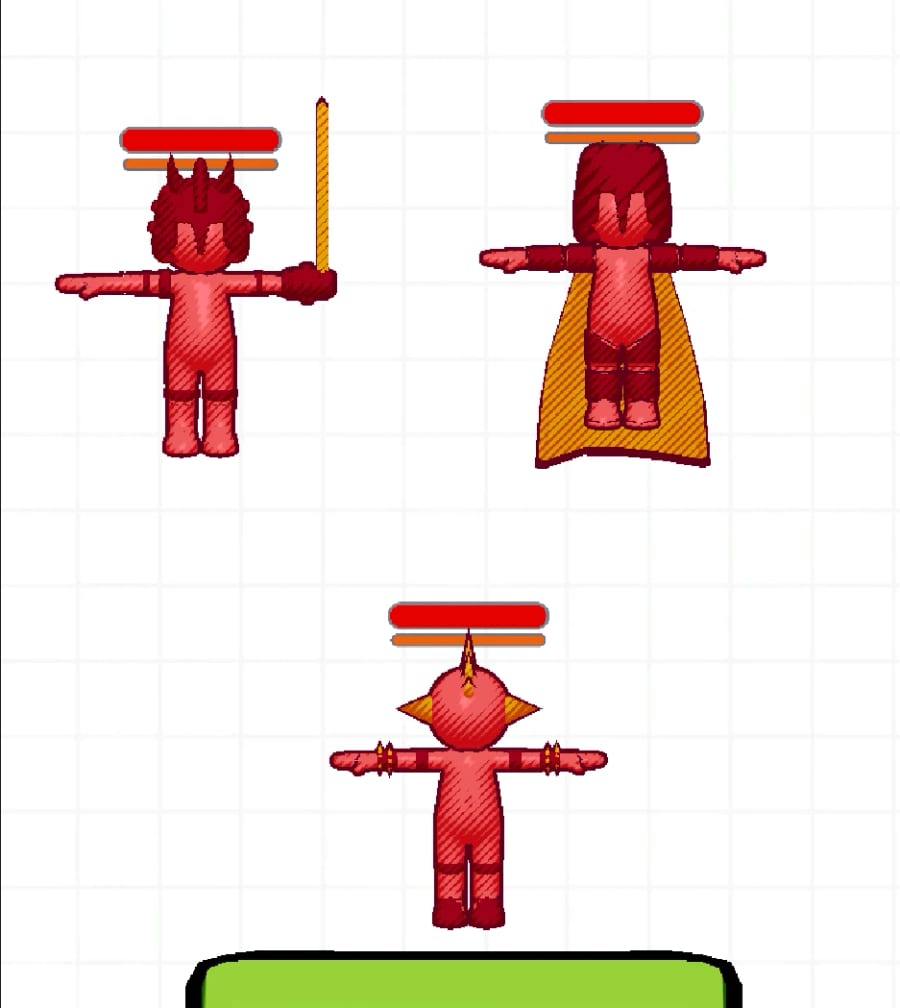
Three red sketchbook bosses in T-pose with health bars, one with a sword, one with a cape, one with pointed ears and a horn

Sketchbook bosses

Three bosses of the sketchbook remake, each with its own look, a sword, a cape or horns and ears.

Conclusion

Conclusion

Design Conclusions

This was the first game where I truly led everything. For a year I rebuilt a hit ninja game, every asset and all 100 levels, built its white-label template, made its 3D, animation and VFX, and art-directed its sketchbook remake while four programmers rotated through it.

The clearest lesson was simple, a game lives in its feel. Matching the original came down to how a kunai flies, how a body swings and how the scenery breaks, and building it all as a template let the remake change every asset and still keep that feel.

Design Takeaways

  • Compare in motion

    Small values like the speed of the kunai or the swing of a ragdoll only read right in motion, so I learned to tune feel by playing both versions side by side in every round of tests.

  • Many looks before one

    Making about ten looks on the real game before the sketchbook was approved showed me that a style is chosen on what players will see in the game, never on a single concept alone.

  • Lead through the changes

    Four programmers rotated through the project in a year. Onboarding each one myself and keeping the Trello and the schedule current kept the project moving through every change in the team.

Next project

The Merging Thief