
Back to Projects
Project 03 / 15

Project 03 · Game

Bottle Flip Fever

A physics bottle flip game where every landing is a party.

  • Hybrid-Casual
  • Physics
  • Mobile
  • Games
Genre:
Hybrid-Casual, Physics Puzzle
Scope:
Game Direction · Physics & Systems Design · Level Design · Art & Game Feel · Monetization Design
Development Time:
3 Months
Team Size:
2
Tools:
Unity (C#) · FEEL (More Mountains) · Blender · Photoshop · Google AdMob
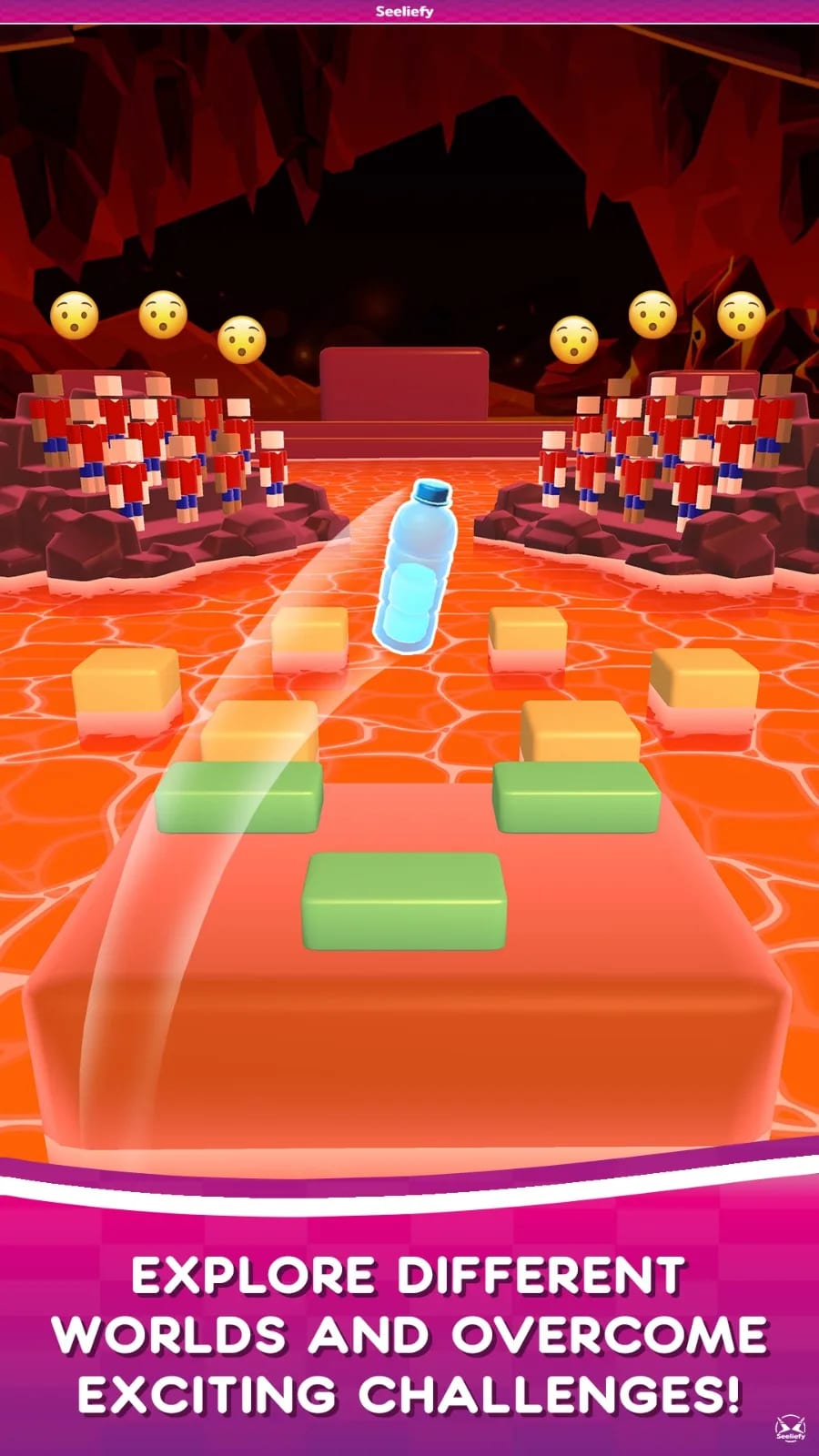
Store art showing the lava world of Bottle Flip Fever

Project Resume

Project resume

01

Overview

A hybrid-casual take on the viral Bottle Flip Challenge. Every bottle obeys real physics, and the score depends on where and how it lands, cheered by a crowd in a water arena.

  • Platform Mobile (Android)
  • Team Size 2
  • Duration 3 Months
  • Engine Unity (C#)

Key Features

  • A swipe whose distance and speed shape the flip
  • Physics per bottle, from shape and water to mass
  • Colored blocks that turn aim into risk and reward
  • 40+ handcrafted levels across 4 environments
  • A crowd that reacts to every landing
  • Collectible bottles with their own VFX and animations

My Role

Game Director & Owner

Owned the game from idea to release, designed every system and built the art, UI and feel, with one programmer on the physics code.

  • Directed the vision, scope and every design call
  • Designed the physics model, levels and economy
  • Built the 3D, shaders, VFX, UI and monetization

  • Game Direction
  • Systems
  • Level Design
  • Game Feel
  • 3D & Shaders
  • UI/UX
02

Design Idea

The Bottle Flip Challenge went viral because landing a flip makes everyone around you cheer. The stores had only a few flip games, yet each was a hit, most with 1 to 10 million downloads, and none felt like a real throw. The idea was a flip game where the physics is honest, the skill belongs to the player, and every upright landing is celebrated like the real thing, with a crowd in the arena.

Constraints

  • Real physicsThe throw and the landing had to feel like a real bottle, and never be scripted.
  • Skill firstPlayers improve by practicing the gesture, and power is never for sale.
  • One-finger playPlayable with the thumb or the index finger, in short, casual sessions.
  • Fair monetizationAds stay out of every throw, and most are rewards the player chooses.
03

Design Goal

I wanted the feeling of the real challenge, the tension of the throw, the wobble on landing and the crowd going wild when it stays up. The physics had to be honest enough that players could read and master it, and deep enough that each bottle and each level asked for a different throw. Progress had to come from skill, with every level offering a safe target and a risky one to choose between, each time.

From first flip to perfect landing

Easy to throw. Hard to master.

  1. SwipeOne gesture throws the bottle, with any finger.
  2. ReadLearn how each bottle flies, spins and lands.
  3. LandLand clean flips on the farthest, hardest blocks.

Player Experience Pillars

  • Honest physicsEvery flip follows real forces.
  • Skill over luckBetter throws earn better scores.
  • Risk and rewardAim safe or aim for more points.
  • Celebrate every landingThe crowd makes each hit matter.
  • Never annoyingAds never interrupt a throw.
04

Design Solution

A swipe sets the distance, force and spin of the throw, and a physics model gives every bottle its own flight. Colored blocks make the score readable at a glance. Purple is the target, green pays more once, yellow pays coins, and the floor and gray blocks pay 2 for any upright landing. A limited number of bottles per level turns each throw into a choice between a safe target and a risky one, while a themed crowd, sloshing water and layered VFX celebrate every landing.

Key Design Choices

  • Swipe to throwDistance and speed of the swipe set how far the bottle flies and how much it spins. Thumb and index both work.
  • Physics per bottleShape, water level, material and center of mass give each bottle its own flight and its own way of landing.
  • Color is the rulePurple, green, yellow and gray blocks tell players what each landing is worth before they even throw.
  • A bottle budgetEach level gives a limited number of bottles, balanced against its target score and its difficulty.
  • A crowd that reactsThemed stands cheer, gasp and throw emojis at every landing, and a clean landing makes them explode.
05

World & Visual Identity

A bottle flip tournament that travels the world. Players throw from a platform in a water arena, with the crowd watching from themed stands. Every ten levels the place changes, from open sea at day and night to a tropical island and the inside of a volcano.

Visual Principles

  • Bright and colorfulSaturated colors and soft gradients everywhere.
  • Built from blocksStretched shapes keep targets readable.
  • A believable bottleClear plastic and water that moves inside it.
  • A crowd in every worldThemed stands on islands, rocks and lava.
  • A journey around the worldDay, night, island and volcano mark the progress.
06

Results & Learnings

Results

  • Released on Google PlayReleased on Google Play with 40+ handcrafted levels across four worlds and three bottles, every level placed, tested and balanced by hand before launch.
  • 10K+ organic downloadsReached 10,000+ downloads with no marketing at all, validating the physics, the scoring and the core loop with real players before any paid acquisition.
  • The next update, builtBuilt the shop, diamonds, three bottle ranks and six new bottles with their own physics and VFX, nine in all, ready for the next release.

Learnings

  • Tune physics for feelReal physics had to feel simple. Some forces were tuned to be less realistic, so the throw became readable and fun without ever feeling fake or scripted.
  • Clear rules beat cleverStars tied to bonus blocks were hard and illogical to players. Moving them to the score made the goal readable, and players started replaying levels for it.
  • Give players toolsBottles with honest physics and levels with walls let players invent their own techniques, like swinging the bottle before a throw or bouncing it off walls.

Media

The work, up close

Project gallery · 15

Roles

Roles & Responsibilities

Game Vision & Direction

  • Researched every bottle flip game on the store and their downloads
  • Wrote the game vision of a skill-based flip with honest physics
  • Directed the programmer on the physics and gameplay code daily
  • Made every design call as the owner, from scope to final polish

Physics & Systems

  • Designed the swipe input and tuned how it sets force and spin
  • Studied torque, rotation and how water moves inside a bottle
  • Balanced the shape, water, mass and material of every bottle
  • Designed the scoring rules for blocks, floor and clean landings

Level Design

  • Built a modular level system from stretched, colored blocks
  • Designed and placed all 40+ levels by hand from modular blocks
  • Balanced the target score and bottle budget of every level
  • Tested every level myself to keep each target fair to reach

Game Feel & Feedback

  • Designed the crowd reactions and set when each one plays
  • Created the landing VFX for misses, hits and clean landings
  • Designed the game sounds, mixing my own with open libraries
  • Wired all the feedback in Unity with FEEL by More Mountains

3D, Shaders & Lighting

  • Modeled all the bottles in Blender, from common to legendary
  • Made every bottle material clear, colorful and light on mobile
  • Wrote the water and lava shaders, the skies and the lighting
  • Animated the legendary bottles, the crowd and their reactions

UI/UX

  • Designed and built every menu, the HUD and the shop in Unity
  • Designed the start screen, where players pick their bottle
  • Created the star progress bar and the level complete flow
  • Made the store art and screenshots for Google Play

Economy & Monetization

  • Designed the coin economy and set the price of every bottle
  • Defined the three bottle ranks and what each one unlocks
  • Set where and when ads play, keeping them out of every throw
  • Planned the rewarded ads and the one-time ad removal purchase

Production & Release

  • Scoped the project and delivered the full game in three months
  • Ran playtests with children and non-gamers, and acted on them
  • Prepared the Google Play release, from the build to the store
  • Planned the roadmap of new worlds, gravity, modes and bottles

Full Case Study

Bottle Flip Fever Case Study

Core Loop

  1. Read the level
  2. Swipe & flip
  3. Watch it fly
  4. Land
  5. Adapt

The bottle is chosen once, on the start screen, before the level begins, and the loop is the play itself. The player reads the layout, where the purple, green and yellow blocks sit, how far away they are and what stands in the way. Then comes the throw, one swipe whose length and speed set the force and the spin, and the best part of the challenge, watching the bottle turn in the air and hoping it lands upright. An upright landing scores, the crowd cheers and a new bottle appears in the hand right away. A miss leaves the bottle lying on the floor and costs one from the budget. Either way the player adapts the swipe or the target and throws again, until the level is cleared.

Flip Physics

Feature Introduction

Bottle Physics & Flip Control

Every throw is simulated. The swipe gives the bottle an impulse and a torque, and gravity does the rest. How far it flies, how many times it turns and how it meets the ground all come from real forces, never from an animation that decides the result.

The game reads the point where the finger touches, the point where it lets go and the time between them. Distance and speed set the force and the spin, with no fixed zones on the screen, so the same gesture always gives the same throw and players build real, lasting skill with every level they play.

Each bottle carries its own physics profile of height, width, water level, material and center of mass. The water inside is visible, so players can read how a bottle will fly and land, and choosing the right one for a level becomes part of the skill.

Design Principles

  • The outcome of every throw comes from physics, so a good landing is always earned by the player and never handed to them by a script
  • The same swipe always gives the same flight, so players can read it, repeat it and master it one level at a time, by feel, with no luck in a good throw
  • Every bottle flies and lands differently, so switching bottles changes how a level is played and what a good throw looks like for that bottle
  • No bottle is required, and since some make a level easier, finding which one fits each layout is left to the player to discover with every new bottle

Feature Breakdown

What shapes a flip

01 Water LevelHow much water it carries, and where
01

Water Level

How much water it carries, and where

The water is the heart of the flip. The model follows how water behaves in a real bottle, where its amount and position change how much and how fast the bottle turns, and how easily it stands. A little water at the base turns steadily and settles, while a very full bottle is hard to land upright. It sloshes in clear plastic.

Function

Make the real way water moves in a bottle the heart of every flip

Design Approach

Decisions made:

  • Study how water moves inside a spinning bottle and model it in the flip
  • Set a different amount of water for every bottle, from a little to nearly full
  • Make the water slosh inside the clear plastic with every swing and impact
  • Tune how much the water slows the spin and steadies the bottle as it lands

Player Impact

Allowed players to...

  • Read the water through the plastic and predict how the bottle will fly
  • Adjust the swipe to a fuller bottle that turns fewer times during the flight
  • Pick wide, safe blocks for the very full bottles that hardly stay upright
  • Learn every new bottle as a new flight, shaped by the water it carries
02 Center of MassWhere the weight sits inside the bottle
02

Center of Mass

Where the weight sits inside the bottle

Where the weight sits decides how the bottle turns and lands. The swipe applies a torque around the center of mass, and low water keeps that point low, so the bottle resists tipping and stands more easily. A higher center tips sooner. Each bottle has its own balance, so a landing can hold with one and fall with another.

Function

Make every landing depend on where the weight sits, as in reality

Design Approach

Decisions made:

  • Study how the torque of a swipe turns a bottle around its center of mass
  • Set the center of mass for each bottle, so it travels with it to every level
  • Use the water level to move the balance point of the bottle up or down
  • Balance the center of mass against the water and the shape of the bottle

Player Impact

Allowed players to...

  • Take riskier landings with a low center of mass that forgives wobbles
  • Aim more carefully with a high center of mass that punishes sloppy throws
  • Match the bottle to the block, since every bottle balances in its own way
  • Plan a whole level around the one bottle whose balance suits it best
03 Shape & WeightHeight, width and how heavy it feels
03

Shape & Weight

Height, width and how heavy it feels

The body of the bottle shapes the whole throw. Tall and thin bottles turn fast and land on a small base; short, wide or square ones turn slower and stand more easily. Weight sets how strong the swipe must be, so a heavy bottle asks for more force and flies on a flatter, more predictable arc than a light one.

Function

Give every bottle a throw of its own through its shape and weight

Design Approach

Decisions made:

  • Model each bottle with its own height, width and size of base to stand on
  • Give each bottle its own weight and the swipe force it takes to throw
  • Tie the size of the base to how easily each bottle stands upright on a block
  • Test every shape on long throws and on short ones across the worlds

Player Impact

Allowed players to...

  • Master one bottle or swap to another shape whenever a level asks for it
  • Go for narrow blocks with a wide-based bottle that forgives a rough landing
  • Time the release more carefully with a tall, thin body that spins very fast
  • Replay a level they know with another shape and find a new way through
04 Bottle Material & CapHow hard the plastic and the cap are
04

Bottle Material & Cap

How hard the plastic and the cap are

The material decides how the bottle meets the ground. Soft plastic absorbs the impact and settles, while a harder bottle bounces more and needs a better throw. The cap is harder still, so a bottle that lands on it bounces away instead of standing. Together they make every surface and every angle read differently.

Function

Make every surface and angle meet the bottle in a different way

Design Approach

Decisions made:

  • Give every bottle its own hardness of plastic, from soft to stiff and bouncy
  • Make the plastic cap bounce harder than the body of the bottle on impact
  • Tune every bounce so it stays readable on the small screen of a phone
  • Match the hardness of every material to the look of the bottle wearing it

Player Impact

Allowed players to...

  • Go for tight, small blocks with a soft bottle that settles right away on them
  • Pick blocks with room to settle when a harder bottle starts to bounce
  • Aim for a clean angle, knowing a landing on the hard cap bounces away
  • Fix the next throw by reading exactly how the last bounce went wrong

Feature Breakdown

The initial bottles

01 Simple Water BottleLow center of mass, the easiest to stand
01

Simple Water Bottle

Low center of mass, the easiest to stand

A plain water bottle with about four fingers of water at the base. The water keeps its center of mass low, so it resists tipping and stands more easily than most bottles. It turns at a steady rate and lands predictably, so it is the one players learn the throw with, and every other bottle is tuned against it as the baseline.

Function

Give players a forgiving bottle to learn the throw and a baseline

Design Approach

Decisions made:

  • Keep about four fingers of water at the base to drop the center of mass
  • Set a steady, even spin that is easy to time on throws of any length or height
  • Tune it as the balanced baseline for every other bottle in the collection
  • Make it settle fast after contact, with very little bounce on every landing

Player Impact

Allowed players to...

  • Learn the gesture fast, thanks to landings that forgive small mistakes
  • Tell exactly what went wrong after a miss, since its spin never changes
  • Clear a whole world with one bottle that works on any kind of block
  • Feel at once how every other bottle differs from this starting reference
02 Juice BottleHeavier, fewer turns, less bounce
02

Juice Bottle

Heavier, fewer turns, less bounce

A square juice bottle, heavier and fuller than the simple water bottle. The extra mass resists the torque of the swipe, so it turns fewer times and flies slower, and on contact it bounces less and settles quickly. It trades speed and reach for control, which makes it the bottle for close targets and landings that must hold.

Function

Offer a heavy bottle that trades speed and reach for close control

Design Approach

Decisions made:

  • Give it a square shape and more weight than the simple water bottle
  • Fill it with more water than the others to cut the spin of every throw it makes
  • Tune a slower, heavier flight that trades reach and speed for control
  • Cut the bounce so the bottle settles the moment it touches a surface

Player Impact

Allowed players to...

  • Switch to it for short throws and land close targets with far more ease
  • Release with much less worry about timing, since the bottle turns so little
  • Risk the small point blocks, knowing its landings hold up more often
  • Swap it out for another bottle on long layouts, where its reach falls short
03 Strawberry BottleFlies straight and far, turns less in the air
03

Strawberry Bottle

Flies straight and far, turns less in the air

A strawberry bottle that flies straighter and farther than the others. Where the juice bottle turns less because of its weight, this one turns less because its flight stays flat and steady, so it reaches the far targets. Its balance is less forgiving than the simple water bottle, so it asks for a cleaner landing.

Function

Offer a bottle that reaches far targets with a flat, steady flight

Design Approach

Decisions made:

  • Tune a flat, straight flight that turns less in the air than the other two
  • Give it the longest reach of the three common bottles, for far targets
  • Set its balance to be clearly less forgiving than the simple water bottle's
  • Make its straight flight stop cleanly against the walls behind the blocks

Player Impact

Allowed players to...

  • Reach the far targets on long layouts where the other bottles fall short
  • Try bank shots off the walls behind blocks with a flight that hits clean
  • Push their skill, since its strict balance asks for a first-touch landing
  • Feel a new kind of flight, one that turns less for a whole different reason

Behind the Feature

How the flip was built

01 Swipe to ThrowTouch start and end · Gesture time · Impulse and torque · No zones

Goal

The same swipe always gives the same flight

  • Let every throw come from real forces, so a good landing is always earned
  • Make the gesture readable, so players repeat it and master it by feel alone
  • Keep the throw comfortable for one thumb on a phone held in a single hand

Constraints

One gesture on a small screen, with no luck

  • Read the whole throw from a single swipe, with no buttons or power meter
  • Give the same result for the same gesture on any phone and screen size
  • Keep long throws and short ones inside the comfortable reach of a thumb

Process

  1. Reading the gesture The game reads where the finger touches, where it lets go and the time between them, so the length and speed of a swipe are the only inputs of a throw, with no power bar.
  2. Impulse and torque Length and speed map through tuned curves to an impulse that sets how far the bottle flies and a torque that sets its spin, and gravity resolves the rest.
  3. Normalized by screen The swipe is measured relative to the screen size, so the same gesture gives the same flight on a small phone and a large one, with no zones or snapping.
  4. Tuned on logged throws I logged long and short throws across the worlds, compared each swipe with where the bottle landed, and adjusted the curves until good swipes landed where players expected.

The decision that made it work

Let physics decide every landing

The swipe only sets the forces, and the simulation decides the result, with no animation choosing a landing. Because nothing is scripted, a good throw is always the player's own, and skill keeps growing level after level.

Result

Players built a skill they could repeat

The same gesture gave the same flight every time, so players learned the throw by feel, fixed each miss by adjusting their swipe and felt each upright landing as something they had earned with their own hand.

02 Bottle Physics ProfilesWater level · Center of mass · Shape and weight · Material and cap

Goal

Every bottle flies and lands its own way

  • Make each bottle change how a level plays and what a good throw is
  • Let players read how a bottle will fly from the water they see inside it
  • Keep every bottle viable, so none is required and each suits some layouts

Constraints

Real behavior, readable on a phone screen

  • Follow how water really moves in a spinning bottle without slowing the game
  • Keep every bounce and wobble readable on the small screen of a phone
  • Make the look of each bottle match the way its physics behave in the air

Process

  1. One profile per bottle Each bottle is a profile of height, width, weight, water level, hardness and center of mass kept in one table, so a new bottle is new values on the same physics, tested at once.
  2. Water moves the balance The water level sets the center of mass, so a little water at the base steadies the landing while a full bottle spins slower, tips sooner and asks for a wider block.
  3. Material and cap Soft plastic absorbs the impact and settles, harder plastic bounces more, and the cap is harder still, so a landing on the cap bounces off the block.
  4. Compared side by side I threw every bottle at the same set of long, short and moving targets and compared the landings, adjusting values until each one felt distinct, still fair and best on some layouts.

The decision that made it work

Make the water visible through the plastic

Showing the water inside clear plastic turned a hidden value into something players read before every throw. They predict how a bottle will spin and land just by looking at it, so choosing a bottle becomes part of the skill.

Result

Choosing a bottle became part of the skill

Each bottle asked for its own throw, so players matched bottles to layouts, replayed known levels with a new shape and found new ways through them, and every bottle in the collection felt worth trying at least once.

Impact

How physics shapes the throw

  • Precision

    The same swipe always gives the same flight, so players adjust by feel, and each miss shows how to sharpen the next throw.

  • Choice

    Bottles fly differently, so players pick one per level, a straight flier for far targets and a heavy one for close, narrow blocks.

  • Discovery

    A wall behind a block can stop a straight flight and help the bottle stand. Players find tricks like this all on their own, by playing.

  • Mastery

    A clean landing pays far more than a wobbly one, so players who can land at all soon start chasing the perfect flip.

Blocks & Scoring

Landings

Every upright landing is a win

Landing upright is the whole point of the challenge, so the game treats it as a celebration. Each landing type has its own VFX and crowd reaction, so a good play feels exciting.

  • Fail

    Tipped over

    The bottle does not end upright. It falls on its side, rolls away or drops into the water. The throw scores nothing, the bottle stays lying there and the next one appears in the hand.

  • Landed

    Wobble landing

    The bottle bounces or wobbles before it settles upright. It scores the value of what it stands on, the points pop up from the bottle itself and the crowd cheers the hit loudly.

  • Clean

    Clean landing

    The bottle stays upright on the first touch, with no bounce or wobble. On a point block it pays double, 20 on purple and 40 on green, with a bigger VFX burst and a wild crowd.

Resources

Four blocks, one score

Core Idea

Levels are built from colored blocks on a themed floor. The color tells the player what a landing is worth before the throw.

Design Goal

Make the value of every target readable at a glance, so each throw becomes a clear choice between a safe landing and a risky one.

Feature Breakdown

The blocks

01 FloorBase of every level · 2 points · World color
01

Floor

2 points for any upright landing

The floor is the base every level is built on, and its color changes with each world. Any upright landing on it pays 2 points, so a good flip is never wasted, even off target, while the colored blocks above it pay far more. It keeps the player rewarded for the challenge itself, the bottle standing up.

Function

Reward every upright landing, keeping any good flip from waste

Design Approach

Decisions made:

  • Make the floor the base that every level layout in the game is built on
  • Theme the floor color for each world and keep every block unchanged
  • Pay 2 points for any upright landing on the floor, wherever it happens
  • Keep the value of the floor far below every colored block in the level

Player Impact

Allowed players to...

  • Score with every upright flip, even one that misses the colored blocks
  • Keep aiming for the colored blocks, since the floor pays only a little
  • Feel the journey around the world as each new place brings a new floor
  • Get something back from a near miss that still lands upright on the floor
02 Neutral BlockGray · 2 points
02

Neutral Block

The shape that holds every level up

Gray blocks build the shape of a level, walls, steps and supports stretched to any size that hold the scoring blocks up in the air. They pay 2 points for an upright landing, like the floor, and a green or yellow block turns gray too once captured, so gray always means a block with nothing more to give than the floor.

Function

Shape every layout with walls, steps and supports for the targets

Design Approach

Decisions made:

  • Use gray blocks for every wall, step and support that shapes a layout
  • Make gray blocks pay 2 points for an upright landing, like the floor
  • Turn green and yellow blocks gray the moment a landing captures them
  • Stretch gray blocks to any size instead of modeling a new piece each time

Player Impact

Allowed players to...

  • Look past the gray structure and spot the colored targets in a second
  • Plan their throws around the gray walls that change the path of a bottle
  • See at once which colored blocks are still left to capture in the level
  • Land on gray and still score two points, so no clean flip goes to waste
03 Point BlockPurple · 10 points
03

Point Block

The main way to score in every level

Purple blocks are the main way to score. Each one pays 10 points every time a bottle lands upright on it, and a level has several of them in the easier spots of the layout. Players can stay on the one they feel comfortable with or pick any other, since all pay the same, which makes purple the balance of risk and reward.

Function

Give players a main way to score, balancing risk and reward freely

Design Approach

Decisions made:

  • Place several purple blocks in the easier spots of every level layout
  • Make every purple block pay the same 10 points, so none is ever a trap
  • Let each purple block pay on every upright landing, with no limit at all
  • Balance every level so it can be finished on the purple blocks alone

Player Impact

Allowed players to...

  • Aim most of their throws at purple, the balance between risk and reward
  • Stay on the purple block they trust most, since all of them pay the same
  • Finish any level on purple alone, scoring again with every upright landing
  • Always find a target within reach, so no level ever feels impossible to them
04 Consumable BlockGreen · 20 points, collected once
04

Consumable Block

A one-time prize in the harder spots

Green blocks are collectibles worth more points. Each pays 20 for an upright landing and then turns gray to show it was collected, working like any gray block from then on. They sit in harder spots, and each level has as many as its target allows, so a 60-point level can end with three greens instead of six purples.

Function

Reward harder throws with more points and a faster way to finish

Design Approach

Decisions made:

  • Place green blocks in harder spots to reward the throw with more points
  • Set how many green blocks each level has from the target score it asks for
  • Pay 20 points for an upright landing on a green block, then turn it gray
  • Make green the strongest color in every layout, so it is seen first

Player Impact

Allowed players to...

  • Finish a level much faster by taking a few risky throws at the green blocks
  • Go for the green early, while the bottle budget still has room to miss
  • Feel a real achievement when they land a bottle on a hard-to-reach green
  • Move back to the purple blocks once every green has been collected
05 Coin BlockYellow · 10 coins once
05

Coin Block

Coins for the shop, placed off the easy path

Yellow blocks are one of the game's sources of coins, along with finishing levels. An upright landing pays 10 coins once, and then the block turns gray and works like any gray block. Coins buy new bottles in the shop. Placed away from the easy path, they add an extra goal to every level and ask players to weigh the risk.

Function

Add an extra goal to each level, one that pays for the new bottles

Design Approach

Decisions made:

  • Make yellow blocks one of the game's main sources of coins for the shop
  • Pay 10 coins, only once, for an upright landing on each yellow block
  • Place yellow blocks away from the easy path to pull players out of it
  • Make a collected coin block work like any other gray block from then on

Player Impact

Allowed players to...

  • Aim off the easy path for the coins that buy new bottles in the shop
  • Weigh an extra goal against the bottles they still have left in the budget
  • Choose the right moment to collect each coin, since it pays only once
  • Come back on a replay for any coins they missed the first time through

Impact

How scoring shapes each throw

  • Value

    Purple blocks pay 10 on every upright landing from the easier spots, so players aim most throws at them to stay safe.

  • Risk

    Green blocks pay more but sit in harder spots and are collected once, so players weigh a risky bottle against safer ones.

  • Budget

    Bottles are limited, so every miss counts. Players plan how many throws to spend on the bonus before playing safe.

  • Ambition

    A level can always give more than a pass, so players who land cleanly and aim higher keep raising their own bar on the levels they know.

Design Iterations

01 Thumb or index fingerEvery grip throws the way the player expects

01 Thumb or index finger

Problem

Players held the phone in two different ways

During playtests some players threw with the index finger, holding the phone in two hands, and others with the thumb, one-handed. The same player often switched between both grips during a single session.

Cause

The swipe distance was tuned for one grip

The distance of the gesture was read for one way of holding the phone, so the other grip gave throws shorter or stronger than the player meant.

Solution

Rebalance the distance math to fit both grips

The input had to follow the player and never the other way around. Reading the swipe by its length and speed, tuned for both hands, let one gesture mean the same throw however the phone is held at that moment.

  • Rebalance how the game reads the length and the speed of every swipe
  • Test every level with the thumb and with the index finger, one after the other
  • Keep one single input for both grips, with no mode or setting to choose from

Result

Every grip throws the way the player expects

Ergonomics stopped being a hidden source of misses. The grip became a personal choice that changes with the moment of play, relaxed or focused, and the game reads every one of them the same way.

  • Players held the phone however they liked and kept full control
  • Many flipped casually with one thumb and used two hands to focus
  • The same swipe gave the same throw with the thumb or the index
02 A budget of bottlesEach throw became a decision

02 A budget of bottles

Problem

Unlimited throws made aiming pointless

With infinite bottles a player could keep throwing at random until something landed, and the choice between a safe target and a risky one disappeared from every level, along with any real reason to aim.

Cause

No cost for a missed throw

A miss cost nothing, so there was no reason to plan a throw or to weigh the bonus block against the point blocks before letting go.

Solution

Limit bottles per level, balanced to the score

A cost on each throw brings back the choice between safe and risky. The budget was tuned so it always leaves room to gamble on the bonus a few times, about ten bottles for a 30-point level, and still finish on safe targets.

  • Give every level a target score and a limited budget of bottles to reach it
  • Balance each budget to the target score and the difficulty of the layout
  • Leave room in every budget for a few risky throws at the bonus blocks

Result

Each throw became a decision

The game gained its strategic layer without a single new mechanic, only a limit. A throw now carries weight before it leaves the hand, and every level turned into a small economy of risk and reward.

  • A miss started to cost a bottle, and players began to plan throws
  • Players chose when to risk the bonus and when to finish it safely
  • A simple, repeated throw became a small strategy with a real cost
03 How stars are earnedStars became logical and reachable

03 How stars are earned

Problem

Stars depended on hitting specific blocks

In an earlier version stars came from the green blocks, and each extra green block landed gave one star. Earning them was very hard, and players could not see the logic behind the rating they received for a level.

Cause

A rule players could not read

A star tied to specific blocks gave no clear path. A good run with no greens earned nothing, and players did not know what to aim for.

Solution

Three score marks on the progress bar

Stars had to reward how well a level was played, whatever the route. Tying them to the score made any good landing count toward them, and the first star became the pass, so the rating doubles as the goal of the level.

  • Try several ways of earning stars across many rounds of playtests with players
  • Move every star from specific blocks to the total score of the level
  • Let players stop at the first star or keep throwing for the other two

Result

Stars became logical and reachable

The rating became readable and fair to every route through a level, and one layout started to serve two kinds of player at once, the ones who want to move on and the ones who want to master every level.

  • Players always knew how far the next star was on the progress bar
  • Casual players passed each level at the first star and then moved on
  • Skilled players replayed levels for three stars and a better score
04 Physics tuned for feelA throw that feels real and plays well

04 Physics tuned for feel

Problem

Fully realistic physics was not always fun

The throw had to feel real, but a strict simulation made some flips feel random or unfair, and a single simple gesture had to give a result that any player, gamer or not, could read, understand and repeat.

Cause

Real forces are not always readable

Small differences in a real throw change the landing a lot, and on a small phone screen the player cannot see why it happened.

Solution

Tune forces to be less real where it helps

Realism was kept where it builds skill and bent where it only builds frustration. The bottle that teaches the game gives a little help near the limit, so early throws reward a good attempt while the forces underneath stay honest.

  • Keep the real forces of a bottle flip as the base of the whole physics model
  • Make the starting bottle pull itself upright near the limit of a landing
  • Give the starting bottle a little more bounce than any other bottle

Result

A throw that feels real and plays well

The physics earned the player's trust. A throw could be read, repeated and improved, which is what turns a simple swipe into a skill worth practicing across the whole game, from the first world on.

  • The flip stayed physical and readable at the same time for everyone
  • Players learned the throw by feel instead of through trial and error
  • A good throw felt earned and never lucky, even on a very first try
05 The cap landingThe cap became part of the throw

05 The cap landing

Problem

A landing on the cap was nearly impossible

An upright landing on the cap, with the bottle upside down, paid 50 points. The cap is harder than the body of the bottle, so this landing almost never happened, and the reward sat on a goal players could not reach.

Cause

The hard cap bounces instead of settling

The material of the cap makes it bounce away on impact, so balancing the bottle upside down asked for far more than any throw could give.

Solution

Turned the cap into a bounce

A reward nobody could earn was worse than no reward at all, so the cap stopped being a target and became part of the physics, a hard plastic surface whose bounce players can see on every throw and quickly learn to read.

  • Remove the 50-point reward for an upright landing on the cap
  • Make the cap bounce harder than the body of the bottle on impact
  • Let a fall on the cap throw the bottle far across the level

Result

The cap became part of the throw

The scoring stopped promising something the physics could not deliver, and a frustrating rule turned into a small moment of surprise that keeps the throw honest and every level a little more lively to play.

  • No reward stayed tied to a landing almost nobody could make
  • A fall on the cap sent the bottle flying across the level
  • Players read the cap as one more reaction of the physics
06 Where the green blocks sitThe risky target stays a real choice

06 Where the green blocks sit

Goal

A green block that is hard to reach and still fair

Green blocks pay more than purple ones and are collected once, so they had to be the risky target of each level without becoming a throw that nobody could make, or one that everybody made on the very first try of the level.

Approach

Iterate on where it sits

The value stayed the same across every test; what changed was where the green blocks sit in each layout, and what stands around them.

Solution

Place green blocks by distance, height and walls

The value stayed fixed and the space did the balancing. Distance, height and the walls around a green block set how hard it is, so its difficulty could be tuned for each level without touching the scoring rules players had learned.

  • Test how far every green block should sit from the player's throwing platform
  • Try different heights and different walls around each green block of a level
  • Keep the value of the green blocks and move the blocks themselves instead

Result

The risky target stays a real choice

The bonus became a fair gamble with a risk players can read before they throw, which keeps the green blocks exciting in every level without ever turning them into a lottery of lucky or unlucky throws.

  • Players could see at a glance that a green block was within reach
  • Aiming for a green block became a real decision against the budget
  • A miss on a green block felt like the player's own call, never luck
07 From one bottle to manyChoosing a bottle became part of play

07 From one bottle to many

Problem

One bottle gave every level the same throw

The first version had a single bottle, so once players learned its flight, every level asked for the same gesture and the throw stopped surprising them, however new or different the layout in front of them was.

Cause

The fun was in how bottles behave

Testing bottles with different shapes and water levels showed that each one flipped in its own fun way, and that difference was the best part of play.

Solution

Turn behaviors into a collection

Variety moved from the levels into the bottle itself. Each new bottle was built around a different flight, and balancing all of them to the same power kept the collection about taste and strategy, with no bottle stronger than another.

  • Give every new bottle its own physics through its shape, water and material
  • Group the bottles in three ranks of three, from everyday to legendary ones
  • Balance every bottle to the same power, with none of them ever required

Result

Choosing a bottle became part of play

A single throwing mechanic gained the depth of many. The same levels could be replayed in new ways, and the shop gained a reason to exist that grows with every bottle the game adds after release.

  • Players switched bottles to fit each level as part of their strategy
  • Each new bottle asked players to learn a whole new way to throw
  • The collection gave a lasting reason to earn coins and keep playing
08 Every upright landing scoresUpright is good, a block is great

08 Every upright landing scores

Problem

A clear success read as a failure

In the water bottle challenge, landing upright is the win. Yet an upright landing outside the scoring blocks paid nothing, so the game answered a clear success with negative feedback, and that felt wrong.

Cause

Only surfaces with a value paid points

The floor, gray blocks and collected coin or green blocks paid nothing, so a good flip in the wrong place was treated like a miss.

Solution

Every upright landing pays at least 1 point

The rules had to agree with the challenge players already knew from real life, where standing up is the win. Every upright landing now pays something, and the colored blocks became the step from a good flip to a great one.

  • Make any upright landing pay at least 1 point, even one on the plain floor
  • Make collected green and coin blocks pay like gray blocks from then on
  • Keep the point blocks as the great landings, worth far more than the floor

Result

Upright is good, a block is great

Feedback stopped contradicting success. The game now celebrates what the player sees as a win, which made play calmer for casual players without taking the challenge away from the ones who chase points.

  • Landing upright always felt good, even away from the point blocks
  • Point blocks became the step from a good flip to an excellent one
  • Play stayed relaxed, with a real challenge for those who wanted it
09 Two points on the floorHalf the effort for the same progress

09 Two points on the floor

Problem

Reaching a target score took too many bottles

With the floor paying 1 point for an upright landing, a level that asked for ten points needed ten good landings on the floor. Progress was slow, and safe play felt like a long grind before the level was done.

Cause

The floor paid too little for the effort

Every upright landing takes a good throw, and at 1 point the floor gave back too little of that effort to move the progress bar.

Solution

Doubled the floor to 2 points

The value of safe play had to match the effort it takes to land a good flip. Doubling the floor kept it well below the colored blocks, so it speeds up progress while aiming for the blocks remains the best way to clear a level fast.

  • Raise every upright landing on the floor from 1 point to 2 points
  • Cut the flips a ten-point level asks for on the floor from ten to five
  • Keep the point blocks far above the floor as the landings to aim for

Result

Half the effort for the same progress

The balance between safe and risky play finally settled where the design needed it. A cautious player always moves forward, and a bold one is still paid far more for every risk they choose to take on a level.

  • Safe play moved the progress bar twice as fast as before
  • A ten-point level took only five good flips on the floor
  • Point blocks stayed the bigger reward for a riskier throw

Level Design

Feature Introduction

Levels built from blocks

Every level is handcrafted from stretched blocks on a modular system, with the floor, gray blocks for walls and supports, and colored blocks for points, bonus and coins. The same pieces build every world, so the rules stay readable while the layouts keep changing across every level and world.

Each layout is parametrized. Blocks sit between a minimum and a maximum distance from the player, every level has a target score and a bottle budget, and three star marks decide how far a skilled player can go past the first one.

Every ten levels a new mechanic or style arrives, like moving blocks or walls behind a target, and a harder boss level closes the set with a new bottle as the reward. Each level was placed and tested by hand.

Design Principles

  • Keep every target reachable with a good throw, so a hard level is always fair and never asks for luck or an extreme precision that a phone screen cannot give
  • Always offer a safe target and a risky one, so every throw in a level becomes a small decision between points and safety, with the bottle budget in mind
  • Introduce a new mechanic or style every ten levels, so the same simple throw keeps finding new problems to solve, with a boss level to close each set
  • Make progress feel like a journey around the world, so each new place rewards the player for getting that far into the tournament across the world

Feature Breakdown

The rules of a level

01 Modular BlocksThe pieces every level is built from
01

Modular Blocks

The pieces every level is built from

Levels are made of simple blocks stretched to any size, the floor, gray blocks for walls, steps and supports, and colored blocks that pay. Because every level uses the same pieces, a player who learns the colors once can read any new layout at a glance, and a new level can be built, tested and changed quickly.

Function

Let players read any layout at a glance, and levels be built fast

Design Approach

Decisions made:

  • Build every level in the game from the same small set of stretched blocks
  • Make a modular system where blocks stretch to the size a layout needs
  • Keep one fixed color for each kind of block in every world of the game
  • Parametrize each layout so a new level can be built and tested quickly

Player Impact

Allowed players to...

  • Learn the block colors once and read any new level within a few seconds
  • Decide each throw before letting go, with the value of every block clear
  • Meet a challenge that comes from the layout, with blocks they already know
  • Feel each world as a new place while the rules of the blocks stay the same
02 Distance RulesHow far each target sits from the player
02

Distance Rules

How far each target sits from the player

Every block sits between a minimum and a maximum distance from the throwing platform. Close targets teach the swipe, far ones demand force and control, and the rule keeps every target inside the range a good throw can reach. It was the main tool to raise the difficulty without ever making a level unfair.

Function

Raise the difficulty without ever making any level unfair to play

Design Approach

Decisions made:

  • Set a minimum and a maximum distance from the platform for every level
  • Place close targets first, while the swipe is still being learned by feel
  • Push the targets farther from the throwing platform as the worlds advance
  • Keep every target within the reach of a good throw, however far it sits

Player Impact

Allowed players to...

  • Learn the swipe on close targets in the early levels without frustration
  • Refine the gesture on far targets that ask for more force and control
  • Blame the throw instead of the level, since every target is reachable
  • Feel their own skill grow as the targets move slowly farther away from them
03 Score & BottlesThe target score and the bottle budget
03

Score & Bottles

The target score and the bottle budget

Each level pairs a target score with a limited number of bottles, both tuned to its layout, so the budget sets how much risk a level allows. Early worlds are generous, so misses do not hurt while the throw is being learned, and later worlds ask players to choose their risks with far more care and spend each bottle with a plan.

Function

Turn every throw into a choice between the bonus and a safe point

Design Approach

Decisions made:

  • Set a target score for every level, based on its layout and on its blocks
  • Tie the bottle budget to the layout so harder levels allow fewer misses
  • Give the early worlds spare bottles, so the throw can be learned safely
  • Keep the score on screen at all times so the target is always in view

Player Impact

Allowed players to...

  • Plan the whole level before the first throw, from the score and bottles
  • Learn without losing levels, thanks to spare bottles in the early worlds
  • Switch to the safe purple blocks as soon as the budget starts to run low
  • Know how far they are from the target, with the score always on screen
04 Star ThresholdsOne star to pass, two more to chase
04

Star Thresholds

One star to pass, two more to chase

Stars serve two kinds of player in one layout. Only the first star is needed to pass, and the other two reward players who want more, so a level can be a quick pass for one person and a long chase for another, while every good landing moves the bar a little closer to the next star, which keeps a known level worth playing again.

Function

Serve casual and skilled players in the very same level and layout

Design Approach

Decisions made:

  • Put three star marks along the progress bar at the top of every level
  • Unlock a finish button the moment the first star of a level is reached
  • Let the throws go on after the level is passed, toward the other stars
  • Tie every star to the score of the level instead of to a specific block

Player Impact

Allowed players to...

  • Pass a level at the first star and move straight on, playing more casually
  • Keep throwing for the second and the third star when they want more
  • Always know how to earn the next star, since every star follows the score
  • Come back to the levels they already passed to earn the stars they missed
05 Moving & Wall BlocksTiming and walls join the aim
05

Moving & Wall Blocks

Timing and walls join the aim

From the later worlds on, some blocks rise and fall on a timer, so the player has to time the throw as well as aim it. Others are L-shaped, with a wall behind the target, where a straight throw can hit the wall and drop the bottle upright. Both change a known throw into a new problem without adding a single new rule.

Function

Turn a throw players already know into a new problem, with no rule

Design Approach

Decisions made:

  • Make some blocks rise and fall on a set timer from the later worlds on
  • Build L-shaped blocks with a wall standing right behind the scoring target
  • Introduce each new kind of block at the start of a new set of ten levels
  • Keep both new blocks readable with the same colors as every other block

Player Impact

Allowed players to...

  • Time the release as well as the aim whenever a block rises and falls
  • Bank the bottle off the wall behind an L-shaped block and drop it upright
  • Solve a fresh problem with the same throw they already know how to make
  • Read every new kind of block right away, with no new rule to learn first
06 Boss LevelsA harder level that gives a bottle
06

Boss Levels

A harder level that gives a bottle

Every ten levels, a boss level closes the set. There is no boss, only a harder layout that asks for the best throws of that world. Clearing it gives a new bottle as a gift, which rewards the milestone and teaches players that the collection exists and that each new bottle flies in its own different way.

Function

Close every set of ten levels with a harder test and a new bottle

Design Approach

Decisions made:

  • Place a harder level at the end of every set of ten levels in the game
  • Build each one to ask for the best throws that the world before it taught
  • Give a new bottle, along with diamonds, as the reward for clearing it
  • Balance every boss level through testing until it feels hard but still fair

Player Impact

Allowed players to...

  • End every set of ten levels on a high, with progress that feels earned
  • Discover that a whole collection of bottles exists beyond the first one
  • Try the new bottle and its own way of flying on the levels that follow
  • Retry a failed boss level with confidence, knowing it is hard but always fair

Wayfinding

How a level guides the throw

01 Building a LevelPlace each block where the throw already wants to go, and let distance and color set the challenge of the level.

Building a Level

Place each block where the throw already wants to go, and let distance and color set the challenge of the level.

Each level is built around the natural throw of the finger. The floor in front of the player is safe ground, the purple blocks sit where bottles landed in tests of swiping without looking, and the greens sit farther or in hard spots. Behind the layout, the island gets closer every level, showing progress as movement.

Focus

Secure the close purple blocks first.

Land on the purple within reach, then risk a throw at a green for more.

Ergonomics

Purple spots came from tests of swiping without looking, the places a natural movement of the finger throws the bottle.

Color & challenge

Green pulls the eye harder than any other block in the level, so the riskiest target is the first one a player notices.

Objectives

Safe Ground

The Floor

The ground in front of the player, where any upright landing still scores and no flip is wasted.

Main Objective

Purple Blocks

Close and almost natural to aim at, with at least one placed right where the finger throws without thinking.

Challenge

Green Blocks

Farther away or in spots hard to throw at, with a color that pulls attention to the challenge.

Progression

The Island

When the background holds an island, it gets closer each level, as if the player really moved.

Worlds

A journey around the world

Sea Arena

World 01 · Open sea under a clear sky

The first arena and the simplest one, with open water, a clear sky and the crowd on floating stands. Easy to read, with close targets and no risk, while new blocks slowly appear.

Sea at Night

World 02 · The same arena as night falls

As day turns into night, the tournament goes on in the same arena, before the same crowd. The light changes, the floor turns a darker purple than the point blocks and teal lanes cross the calm water.

Tropical Island

World 03 · The shore of a tropical island

An island appears on the horizon and the arena moves to its shore. The crowd stands on small sandy islands with palm trees, and a smoking volcano hints at what comes next.

Inside the Volcano

World 04 · A lava floor and a loud crowd

The last world takes the tournament inside the volcano, with a lava floor, stalactites hanging above and the loudest crowd on volcanic rock, celebrating each clear with fireworks.

Game Feel

Feature Introduction

Crowd, Water & Feedback

The Bottle Flip Challenge is fun because everyone cheers when the bottle stays up, so the crowd became a feature of its own. The stands face the player in every world and answer every throw, so even a single flip happens in front of an audience.

The bottle itself carries most of the feedback. Every physical reaction is pushed just far enough to be read on a small screen, so players see why a landing held or failed and correct the next throw without a single word of text.

Rewards scale with quality. Each kind of landing has its own confirmation, built with FEEL, so a better throw always looks and sounds bigger than the one before, and the rank of the bottle adds its own layer of effects on top of it all.

Design Principles

  • Every throw gets an answer from the crowd in the stands, so no landing ever goes unnoticed and a hit always feels like an event worth cheering
  • The bottle shows its physics through bumps, water, bounce and squash, so players can always read what just happened to their throw and why
  • Feedback never gets in the way of the next throw, so every celebration ends fast and a new bottle is already in the hand, ready to fly
  • The celebration matches the world and the bottle, so each place and each rank has its own crowd and its own kind of party when a level is cleared

Feature Breakdown

The feedback, in detail

01 The CrowdEmotional feedback for every throw
01

The Crowd

Emotional feedback for every throw

Blocky fans fill the stands in front of the player, themed to each world, on floating stands at sea, small sandy islands with palm trees and volcanic rock inside the volcano. They react to every throw, positive, negative or neutral, and a clean landing sets them off with colored emojis and loud fireworks.

Function

Make every landing a moment the whole arena reacts to out loud

Design Approach

Decisions made:

  • Place the stands and the crowd in full view of the platform and the throw
  • Theme the crowd and the stands for each world, from the sea to the volcano
  • Give the crowd positive, neutral and negative reactions to every throw
  • Save the colored emojis and the fireworks for the best landings only

Player Impact

Allowed players to...

  • Feel that every flip matters, with a whole audience watching each throw
  • Answer a gasp from the crowd with a better throw right after a miss
  • Chase clean landings, the only ones that set off the crowd's fireworks
  • Reach each new world as a reward, greeted by a new crowd of its own
02 The BottleEvery physical reaction of the bottle
02

The Bottle

Every physical reaction of the bottle

The bottle itself shows what happened. It bumps when it meets the ground, the water sloshes inside the clear plastic, a light squash and stretch marks every bounce and the cap bounces harder than the body. After a miss it stays lying on the floor, so the player sees exactly how and why the landing failed.

Function

Show players on the bottle itself just why a landing held or fell

Design Approach

Decisions made:

  • Add an impact bump the moment the bottle hits the floor or any block
  • Write a water shader that sloshes inside the clear bottle on every impact
  • Add a light squash and stretch to each bounce of the bottle on the ground
  • Leave every missed bottle lying on the floor exactly where it ended up

Player Impact

Allowed players to...

  • Feel the tension of the wobble on landing until the bottle finally settles
  • Adjust the next throw by reading exactly how the bottle bounced last time
  • Sense the weight of the bottle through the water sloshing around inside it
  • See how and why a landing failed, with the bottle still lying on the floor
03 Landing ConfirmationA bigger reward for a better flip
03

Landing Confirmation

A bigger reward for a better flip

Each type of landing plays its own confirmation. A miss gets no reward, a landing on the floor gives a check and two points, a point block gives a stronger effect with the points rising from the bottle, and a clean landing on the first touch plays the biggest VFX burst of all, with the crowd at its loudest.

Function

Make every better landing look and feel bigger than the one before

Design Approach

Decisions made:

  • Make a different confirmation VFX for each type of landing and block
  • Make the points rise from the bottle itself after every scoring landing
  • Save the biggest VFX burst of the game for clean, first-touch landings
  • Turn every captured block gray with a check mark as soon as it pays out

Player Impact

Allowed players to...

  • Aim for clean landings, which look and feel the biggest of every throw
  • Read the score of a hit at once, from the points rising off the bottle itself
  • See at a glance what is left to take, with captured blocks turned gray
  • Replay levels to land better throws that also look much better on screen
04 Effects by RankEvery rank adds more to the show
04

Effects by Rank

Every rank adds more to the show

The effects grow with the rank of the bottle. Common bottles use the standard confirmation, rare ones add trails, sparks and a stronger landing, and the legendary bottles are custom bottles with full animations that react to each landing type. The dragon breathes fire on a clean landing and puffs smoke after a miss.

Function

Make every rank of bottle worth collecting and worth what it costs

Design Approach

Decisions made:

  • Keep the standard landing confirmation for the three common bottles
  • Add trails, sparks and a stronger landing effect to all three rare bottles
  • Animate each legendary bottle, from the moment it is equipped to landing
  • Give every legendary bottle its own reaction for every type of landing

Player Impact

Allowed players to...

  • Work toward higher ranks for richer effects that draw every eye on screen
  • Judge in the shop whether the effects of a bottle are worth its price
  • Show their own style with a bottle, since every rank looks clearly different
  • Keep throwing even after a miss, when a legendary reaction makes it fun

Shop & Monetization

Feature Introduction

Bottles, Coins & Rewarded Ads

The game runs on two currencies. Coins come from playing, from yellow blocks, levels and stars, and diamonds are the premium one, bought with real money or won at every boss level, every ten levels, along with a new bottle for the shop.

Ads were designed around the throw. The few full-screen ads wait for a break between levels and the banner sits far below the platform, so the space and the rhythm of every level belong to the player, and the ads worth watching are the ones the player asks for, after a win or in the shop, at the moment that suits them.

A one-time purchase removes every ad for good, and the shop sells diamonds to spend on bottles. Every bottle is balanced in power, so what money and ads buy is time, style and a skipped level, never a stronger throw, and a player who never pays still plays exactly the same game as one who pays for everything.

Design Principles

  • A skill game lives on rhythm, and an ad in the middle of a level would break the feel a player just built, so ads stay out of the throw
  • Players should watch an ad because they want something back, so almost every ad in the game is a reward the player asked for at a moment of their choosing
  • Paying or watching has to feel worth it, so bottles grow richer and more decorated with every rank, up to the legendary ones
  • Progress should keep on giving, so boss levels pay a bottle and diamonds, and every extra star in a level means more coins to spend in the shop

Ads

Ads that stay out of the throw

  • Banner

    A small footer banner

    A small banner stays in the footer while playing, far below the platform, the blocks and the throw, so it earns money without ever covering anything the player needs to read or reach during a level, from the first throw to the last.

  • Full screen

    Random ads between levels only

    Full-screen ads come only by chance between levels, so most transitions have none, and when a player restarts a level that still has bottles left. Restarting after running out of bottles is free, and no ad ever plays during a throw, so the feel a player builds is never broken.

  • Rewarded

    By the player's choice

    The player watches a full ad only in exchange for something they asked for, doubling the coins or diamonds of a win, skipping a hard level without its stars or earning coins in the shop.

    • Double the coins or diamonds earned after a win
    • Skip a hard level, with no stars, which coins cannot do
    • Earn coins in the shop to buy more bottles
  • One-time purchase

    Remove ads

    A single small payment removes every ad from the game for good, for players who would rather pay once than watch ads, with nothing else in the game locked behind that one purchase at all.

Feature Breakdown

The bottle ranks

01 Common BottlesGeneric bottles that start the collection
01

Common Bottles

Generic bottles that start the collection

The first rank is generic, everyday bottles. They are easy to buy with coins, and the first ones come free as players progress, so everyone starts a collection early, tries bottles with different physics and begins to shape the game around the bottle they like best, all with the standard landing effect.

Function

Open the collection early and let players shape the game their way

Design Approach

Decisions made:

  • Base the first rank on generic, everyday bottles of water, juice and fruit
  • Price them low in coins and give the first ones away as play goes on
  • Give each common bottle its own physics, so even the first ones differ
  • Keep the standard confirmation effect for every one of their landings

Player Impact

Allowed players to...

  • Start a collection early, with the first bottles coming easily through play

  • Try each bottle and pick a favorite, since each one flies its own way
  • Keep earning coins with a purpose, since common prices are within reach
  • Shape the whole game around the bottle they like best from the very start
02 Rare BottlesA step up that shows bottles evolve
02

Rare Bottles

A step up that shows bottles evolve

The second rank is parodies of famous drinks, like a cola, a guarana soda or a grape soda. Bought with coins, they add trails, sparks and a stronger landing effect, each with its own physics. They are the step between common and legendary, a taste of how much better bottles get, so players want the top rank.

Function

Reward progress with better bottles and make the top rank tempting

Design Approach

Decisions made:

  • Base the second rank on parodies of famous drink bottles, like a cola

  • Price the rare bottles in coins, within reach of steady, regular play

  • Give each rare bottle its own physics, so the step up is felt in the throw
  • Make the rare rank the midpoint between the common and legendary ones

Player Impact

Allowed players to...

  • See that bottles keep evolving and want more after the first rare one
  • Imagine how good the legendary bottles must be from what rare ones show
  • Learn a new throw with every rare bottle, since each has its own physics
  • Buy a rare bottle on the way up the ranks, with coin prices within reach
03 Legendary BottlesCustom bottles, full of effects
03

Legendary Bottles

Custom bottles, full of effects

The top rank is custom bottles, far from anything on a shelf, heavily decorated, full of VFX, animated when equipped and with a reaction to each landing type. One is a small dragon with a bottle neck hidden in its mouth. They are priced high, so players replay levels for more stars and coins, and they are worth it.

Function

Give the collection a top goal that is worth replaying levels for

Design Approach

Decisions made:

  • Design the top rank as custom, heavily decorated bottles from geek culture
  • Add VFX, trails and auras to the whole flight of every legendary bottle
  • Make the legendary bottles the most valuable items in the whole shop
  • Price the legendary bottles high to reward the player's time and skill

Player Impact

Allowed players to...

  • Keep collecting until the very end, with a clear top goal always ahead
  • Show off a legendary bottle on every screen through its equip animation
  • Turn each throw into a small show, with a reaction to every kind of landing
  • Replay levels for more stars and coins to afford the high legendary prices

Collection

The legendary bottles

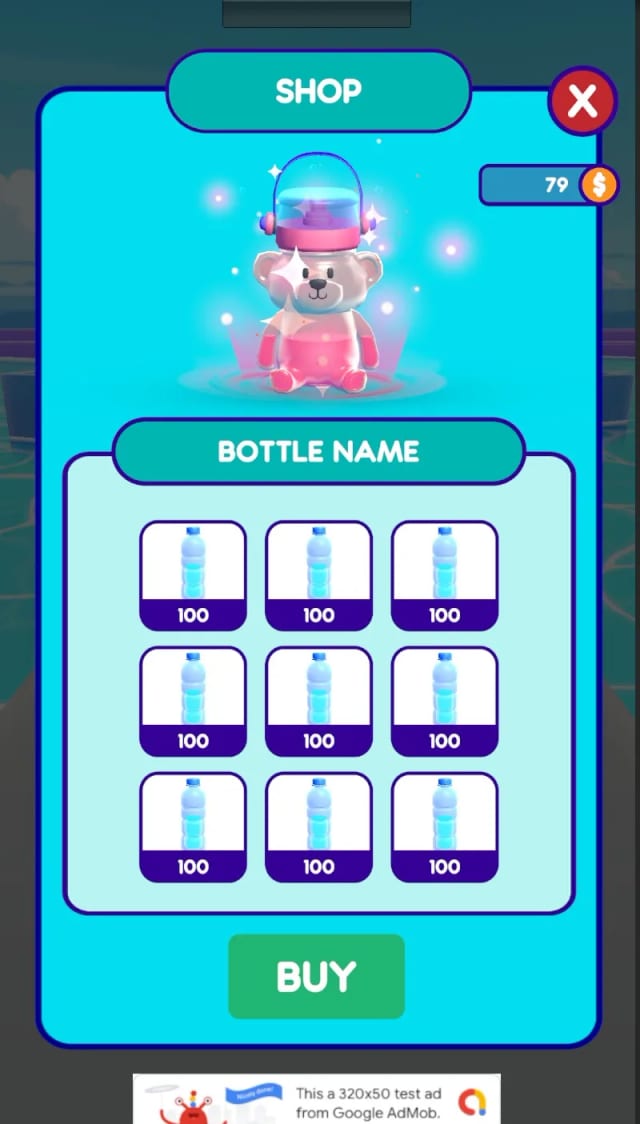
  • The bottle shop with a pink legendary bottle

    Legendary

    Cute Teddy Bottle

    A cute pink teddy bear, the first legendary bottle, covered in glitter, sparkles and soft, cute effects from start to landing.

    Effects

    • Glitter bursts on each landing
    • A sparkle trail through the flight
    • Cute shapes pop around it
    • Its own reaction per landing
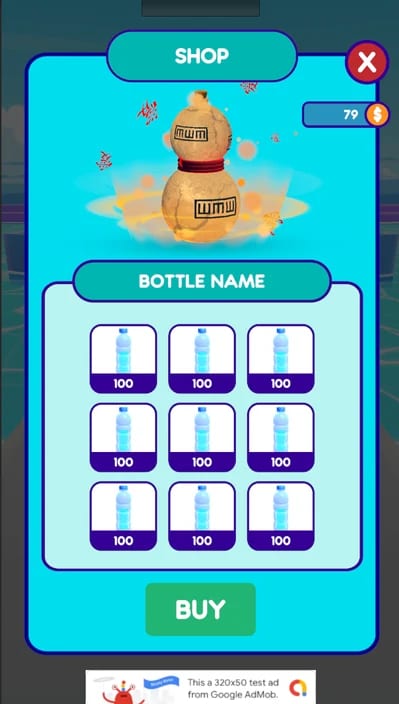
  • The Sand Monster bottle in the shop

    Legendary

    Sand Monster Bottle

    A sand monster in a gourd, a nod to a famous ninja from anime, with sand and glowing symbols swirling all around it.

    Effects

    • Sand swirls around the bottle
    • Glowing symbols on the gourd
    • Sand bursts upward on landing
    • Its own reaction per landing
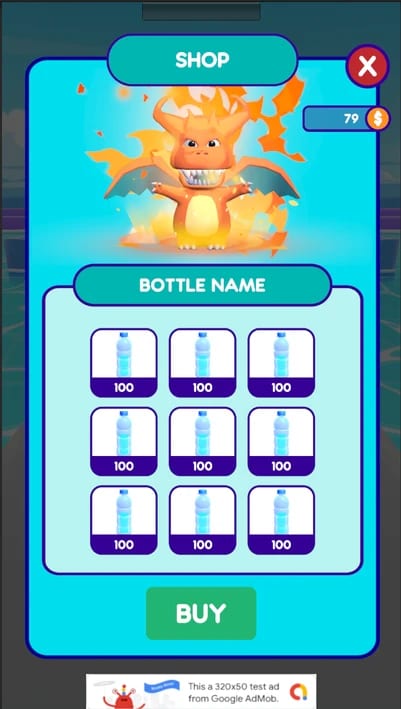
  • The Legendaryzard bottle in the shop, breathing fire

    Legendary

    Legendaryzard Bottle

    A small fire dragon, a nod to a famous pocket monster, and the most valuable bottle in the shop, alive on every throw.

    Effects

    • Wings open when it is equipped
    • Breathes fire on the start screen
    • A trail and an aura in flight
    • Fire on a clean landing
    • Puffs of smoke after a miss

Development

Development

Design Process & Early Prototypes

Bottle models

Conclusion

Conclusion

Design Conclusions

Bottle Flip Fever is one of my favorite games I have built, from idea to release. The goal was to bring the viral challenge to the phone with the same focus and the same feeling, landing a bottle upright and knowing it was your own skill that made it stand there.

Physics is the heart of the game, but not all of it. An exact copy of reality felt worse, so the forces were bent, and parameters built on physics shape each bottle until it feels real, fair and readable, while the skill of landing it upright always stays in the player's own hands from the first level to the last.

Design Takeaways

  • Own the whole loop

    Designing, modeling, lighting and tuning the same bottle let every decision serve one thing, the feel of a single throw, from the swipe to the moment the whole crowd reacts to it.

  • Celebrate every good play

    This game is about juice. Landing upright had to feel like the real challenge, so the crowd, the water, the VFX and the sounds all celebrate a good throw and ask for another.

  • Ergonomics matter

    I watched how people held the phone and threw, then tuned the swipe for comfort with the thumb and the index finger, so anyone could adapt to the throw within the first levels.

Roadmap

Where the bottle goes next

Bottle Flip Fever is my own game, and I still plan to release more of it. The next update is already built, and new worlds, modes and bottles come after it.

  • Planned

    New worlds, new gravity

    The journey continues past the volcano into the city and then space, and every new place changes the physics of the throw itself.

    • Moon, Mars and Jupiter, each with its own gravity
    • Wind, ice, slippery surfaces and geysers
    • A city and a radioactive zone
    • 100+ more handcrafted levels
  • Planned

    New ways to play

    Modes that turn the same throw into new challenges, from live battles to runs where a single miss ends everything at once.

    • Real-time PvP bottle battles with leaderboards
    • A PvE progression mode
    • Hard mode, puzzle levels and a zero-mistake run
    • Daily missions and timed challenges
  • Planned

    Bottles with mechanics

    New bottles built for the new levels, each one with a mechanic that solves a problem the new worlds create for the player.

    • An anti-gravity bottle for the space worlds
    • A fireproof bottle for the lava levels
    • Shop filters and classifications
  • Planned

    A living game

    A release built for regular updates, with the next one already made and a plan for events and themed drops right after it.

    • The shop, coin economy and 9 bottles, already built
    • Limited-time events and themed bottle drops
    • Exclusive bottles in a cash shop
The farmstead from above, with the house, the open shed, the silos and the soybean field

Next project

Agriculture Training Simulator

A hardware and software venture that brought agricultural machine training into a simulator.