

Back to Projects
Project 05 / 13

Project 05 · Game

Big Crusher

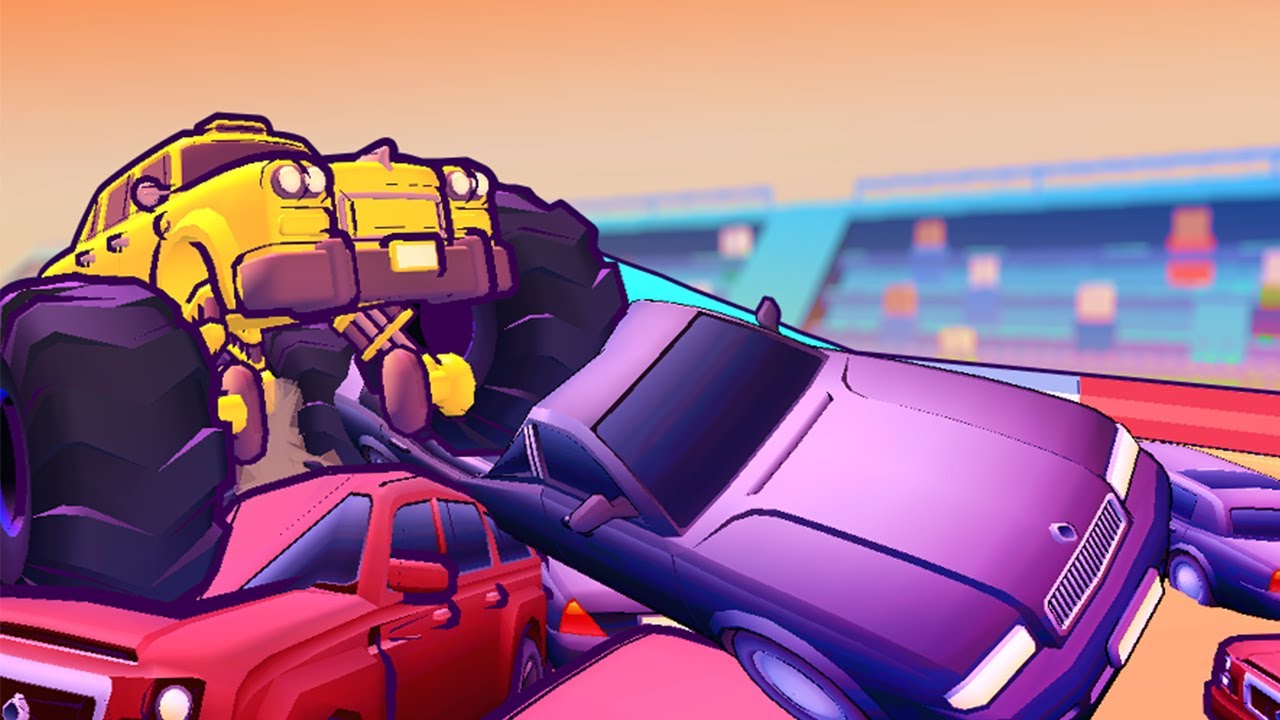
A monster truck arena game where every crushed car helps pay for a bigger, stronger truck.

  • Hybrid-Casual
  • Arcade
  • Mobile
  • Games
Genre:
Arcade Arena, Hybrid-Casual
Scope:
Game Design · Level Design · Balancing & Economy · Art Direction · Game Feel
Development Time:
2 Weeks
Team Size:
3
Tools:
Unity
Big Crusher official trailer
0:00 0:00

Project Resume

Project resume

01

Overview

A hybrid-casual monster truck arena game. Players crush cars for cash, feel when the cars get too tough and upgrade their truck, clearing arena after arena in front of a cheering crowd.

  • Platform Mobile (Android & iOS)
  • Team Size 3
  • Duration 2 Weeks
  • Engine Unity

Key Features

  • Crush cars to earn cash and clear each arena
  • A monster truck show with a crowd that cheers every crash
  • Upgrade the tires, body and fuel of your truck
  • Unlock bigger trucks with giant tires and more wheels
  • Fly off ramps and rings of fire onto fields of cars
  • Cars that dent, burn and explode under the wheels

My Role

Game Designer & Art Director

Owned the game design and art direction, coordinated two programmers, and built the arenas, balance, 3D, VFX and sound.

  • Made every game design and art direction call
  • Designed the arenas and balanced upgrades and economy
  • Set the visual language and built the art in Unity
  • Game Design
  • Level Design
  • Balancing
  • Art Direction
  • 3D & Materials
  • Game Feel
02

Design Brief

The studio had a one-page game design for a monster truck arena game, to be built in two weeks as a demo for the publisher Sunday. Everything beyond that page was mine to decide: how the cars break, how the truck grows, how each arena is laid out and how the fantasy of a monster truck show comes across on a phone.

Constraints

  • Two weeksA complete, playable game from a one-page idea in two weeks.
  • A publisher demoBuilt for the publisher Sunday to test how it performs on mobile.
  • A monster truck showArenas where trucks destroy cars while a crowd cheers.
  • Hybrid-casual depthMore detailed visuals and progression than a typical hyper-casual game.
03

Design Goal

I wanted the monster truck fantasy to be strong from the first second: giant tires, rings of fire and a crowd going wild. Crushing cars had to feel good under every wheel, and the need to upgrade had to be felt before it was explained. Each arena needed a constant sense of progress, with light cars to start and tough ones that ask for a stronger truck.

From the first crash to the biggest truck

Easy to crush. Hard to stop upgrading.

  1. CrushDrive over cars and turn every crash into cash.
  2. GrowFeel tough cars and upgrade the truck.
  3. ClearClear the arena and open the road to the next.

Player Experience Pillars

  • A strong fantasyGiant tires, fire and a loud crowd.
  • Felt firstTough cars show when to upgrade.
  • Good under every wheelCrushing always feels satisfying.
  • Constant progressArenas start light and end tough.
  • A way backRamps help trucks that fall behind.
04

Design Solution

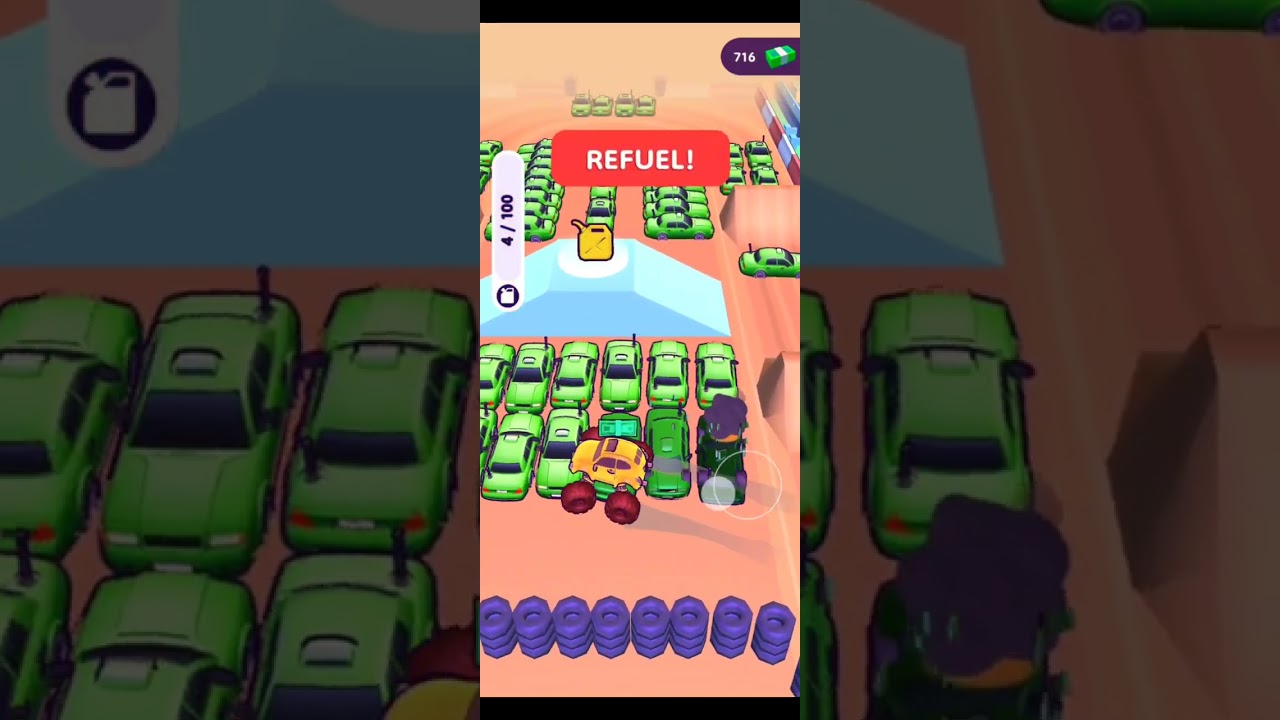
Each arena is a field of cars placed by hand, with paths to drive through and fire ring ramps that lead to a closed gate at the end. Every wheel deals its own damage, so a well-placed truck crushes several cars at once. Cars are tougher by type and color, and when the truck only rolls over them, the player knows it is time to upgrade. Fuel sends players back to the gas station, the parts shop sells tire, body and fuel upgrades, and bigger trucks with more wheels open the next arenas.

Key Design Choices

  • Every wheel crushesEach wheel damages the car under it, so one pass can break up to four cars and car spacing matters.
  • Tougher and tougherEach new kind of car is tougher than the one before, so players feel when their truck starts to fall behind.
  • Fuel sets the paceThe tank runs out inside the arena, so every run is a race to earn as much cash as possible before refueling.
  • Rings of fireRamps launch the truck through fire onto the cars below, and the fall hits far harder than driving over them.
  • Tires, then wheelsEach new truck has bigger tires, and past the largest tire it gains extra wheels, the biggest jump in power.
05

World & Visual Identity

A monster truck show in a bright, colorful arena built to feel radical. Ramps and rings of fire send the truck flying over fields of cars, giant tires line the track and a packed crowd jumps at every crash. The truck is the star: huge tires, body parts and flames from the exhaust.

Visual Principles

  • A monster truck showStands, a crowd and fire in every arena.
  • Bright and colorfulSaturated, toy-like colors for mobile.
  • Radical arenasRamps and fire rings built for big jumps.
  • Speed you can seeExhaust flames and camera zoom at full speed.
  • The tire is the heroGiant tires that grab the eye first.
06

Results & Learnings

Results

  • Built in two weeksTook a one-page idea to a complete, playable game in two weeks, owning the game design and art direction and coordinating two programmers.
  • Every arena by handDesigned and balanced every arena by hand, each with its own mix of car toughness, ramps and paths, tuned against every upgrade.
  • Real crashes, no lagHand-made damage stages made every crash feel physically real while dozens of cars stayed on screen, at no cost to performance.

Learnings

  • Let players feel itA truck that only rolls over a car says "upgrade" better than any message. Readable toughness taught the loop without a tutorial.
  • Fantasy sells the loopGiant tires, fire and a cheering crowd made the same crush-and-upgrade loop feel like a show, and every piece of it did a job in play.
  • Juice makes it tactileExplosions, fire, squash and stretch and a truck that dances while refueling made crushing feel tactile and kept even the waits fun.

Media

The work, up close

Project gallery · 1
Big Crusher official trailer
0:00 0:00

Official trailer

Roles

Roles & Responsibilities

I owned the game design and the art direction, with the studio owner approving, coordinated two programmers and built nearly everything else myself.

Design & Coordination

  • Made every game design and art direction call in the game
  • Coordinated two programmers on the game's systems and features
  • Expanded a one-page idea into the full loop, arenas and progression
  • Defined how cars break, trucks grow and fuel paces a run

Level Design

  • Designed every arena and laid out each field of cars by hand
  • Built paths and spacing so each wheel can crush a different car
  • Added ramps, high ground, an elevator and a seesaw
  • Drew the track around each arena to show the way to the end

Balancing & Economy

  • Balanced the toughness of every car for steady progress per arena
  • Tested each upgrade in every arena until the pace felt right
  • Priced upgrades and trucks to fit a truck switch per arena
  • Set how much cash every car pays and what each upgrade costs

Vehicle Setup & Feel

  • Split every truck into wheels, suspension and body for the code
  • Built a prefab for each truck and tuned its parameters by hand
  • Tuned each truck's force, weight, tire size and tire weight
  • Tuned the suspension so crushing cars feels good under each wheel

Art Direction

  • Created the visual language and identity of the whole game

  • Set the materials, shaders and lighting, approved by the owner

  • Chose the colors of every truck and every car type in the arena
  • Kept every truck, tire and arena selling the monster truck fantasy

3D & Materials

  • Modeled the arenas and adapted the car models from base assets
  • Modeled several tire designs to make each truck stand out
  • Created the materials and shaders that give the game its look
  • Set up the lighting of every arena to fit the visual language

Animation, VFX & Audio

  • Animated the trucks, the crowd and the refueling feedback
  • Created every VFX, from exploding cars to flamethrowers
  • Set up camera shake, zoom and haptics for speed and impact
  • Made the sound effects and placed each one in the game

Tech Art, Testing & Ads

  • Set up car deformation in stages to keep performance
  • Ran the tests and iterations for every arena and upgrade
  • Defined the in-game economy so the game stays smooth
  • Planned power-up drops to be unlocked with rewarded ads

Full Case Study

Big Crusher Case Study

Core Loop

  1. Drive into the arena
  2. Crush cars
  3. Earn cash
  4. Feel the limit
  5. Upgrade the truck

The loop is built around one feeling: power that runs out. Inside an arena the truck crushes cars, and every destroyed car turns into cash, the reward that drives everything else. Sooner or later it meets a limit, and the game has two. Fuel sets how long a run lasts, so every run becomes a race for the most valuable cars. The cars themselves get tougher as the arena goes on, until crushing one takes too long. Both limits point to the same answer, the parts shop outside the arena: upgrades turn the cash into power, the truck goes back in stronger and the cars that stopped it now break. The cycle never changes, only its scale, as every new arena asks for more power and every upgrade answers it.

Arena Design

Feature Introduction

Arenas built by hand

Purpose

Each arena is a monster truck show laid out by hand. Fields of cars are lined up to look good and to leave paths to drive through and plan around. The arena has height too: a dirt circuit with side ramps, fire ring ramps, blue ramps to jump over rows of cars and high ground to climb. A destruction bar at the top shows how much is left, and when it fills, the gate opens. The game is linear: curving roads link one arena to the next, so the way is always forward and the progression stays direct. Outside every arena, a gas station refills the tank and a parts shop sells upgrades.

Design Goal

  • Make every arena feel like a monster truck show
  • Keep the game linear, so the way forward is always clear
  • Use ramps to send even a weak truck flying onto the cars
  • Link arenas with curving roads that let players enjoy the ride

Key Areas

  1. 01 Start LineWhere every run begins
  2. 02 Gas StationRefuels the truck between runs
  3. 03 Parts ShopTire, body and fuel upgrades
  4. 04 Car FieldsCars lined up by type and color
  5. 05 Linking RoadsCurves that lead to the next arena
  6. 06 Fire Ring RampsHeavy damage from above
  7. 07 Dirt CircuitSide ramps around the arena
  8. 08 High GroundAn elevator and a seesaw to the top
  9. 09 Destruction BarShows how much is left to break
  10. 10 Arena GateOpens when the bar fills

Feature Breakdown

Car toughness progression

Feature Breakdown

Ramps and height

Feature Introduction

Selling the monster truck fantasy

The game is a monster truck show on a phone, and the fantasy had to be strong from the first second. Giant tires, a crowd in the stands and rings of fire come straight from real monster truck arenas, and every one of them also does a job in the game: guiding the route, rescuing weak trucks or rewarding big plays.

The truck is the star of that show. Its tires are giant and grow with every new truck, body upgrades add a rocket, a big light and flamethrowers, and flames burst from the exhaust at full speed. The arena answers with rings of fire that explode as the truck flies through them, so every jump looks like a stunt.

The crowd jumps and cheers when the player does something interesting, and the sound effects land with each crash. Together they turn a simple loop of crushing and upgrading into a show the player is the star of.

Design Principles

  • Every element of the fantasy also does a job in the game
  • The truck looks bigger and meaner with every upgrade and every new truck
  • The crowd rewards the player for playing big
  • Destruction stays visible, so the arena shows the player's progress

Feature Breakdown

The fantasy, in detail

Impact

How the arena shapes each run

  • Optimize

    Every wheel crushes on its own, so players steer to fit a different car under each tire and break several cars in one pass.

  • Race the Tank

    The tank empties inside the arena, so every run is a race to crush the most valuable cars before going back to refuel.

  • Feel the Limit

    A new kind of car that the truck only rolls over tells players it is time to upgrade, without the game saying a single word.

  • Play Big

    Ramps turn a drop into a big crash for the crowd, so weak trucks keep earning cash and can push on to the next arena.

Trucks & Upgrades

Feature Introduction

Trucks, upgrades and cash

Every crushed car pays cash, and cash buys power in two ways. Upgrades in the parts shop improve the truck the player already has, with two upgrades each for tires, body and fuel. New trucks are the bigger step: each one is heavier and carries bigger tires, and the largest ones add more wheels.

Every wheel is its own source of damage. A truck crushes the car under each tire, so more wheels and bigger tires break more cars in a single pass. Damage upgrades change the tire color, size upgrades make the tires bigger, and body upgrades add parts, from a rocket on top to flamethrowers at the back.

Upgrades always make a real difference, and when all six reach their top level, the next truck goes on sale. The first arena pays for almost every upgrade of the first truck, so players learn to switch trucks in the next one. After that, when even a maxed truck breaks cars slowly, the answer is a bigger truck or patience.

Design Principles

  • Every upgrade makes a real difference the player can feel in the very next run, on the truck and on the cars it breaks
  • Progress shows on the truck itself, so players read it at a glance: tire color and size, body parts and the number of wheels
  • A maxed truck that slows down against tough cars is the signal to buy a bigger one, with bigger tires or more wheels
  • The cash from each arena is enough to reach the next one almost ready for it, so players still work a little for the next truck

Feature Breakdown

The truck, part by part

Feature Breakdown

Upgrades

Feature Breakdown

New trucks

Impact

How upgrades shape each run

  • Feel

    Every upgrade changes how the truck looks and how fast cars break, so players feel their progress in the very next run.

  • Plan

    Upgrades have a ceiling, so players weigh one more upgrade against saving for a bigger truck to take into the next arena.

  • Chase

    Bigger tires and extra wheels are the biggest jump in power, so players chase the next truck and the arena it unlocks.

  • Choose

    When a maxed truck slows down, players choose between buying a bigger truck and grinding with the one they have.

Visual Feedback

Feature Introduction

Feedback you can feel

Big Crusher runs on juice, and it works on two levels that feed each other. Visual feedback shows what the game is doing: damage on a car, fuel running out, speed and impact. Feeling is what the player gets from it: the weight of a crush, the relief of a car that finally breaks, the fun of a wait that is never boring.

The clearest case is a tough car. Crushing it can take many passes, sometimes ten or more, and each one only dents it a little, so a player could start to wonder if the damage counts at all. Then it catches fire, and the player knows it is almost done. The crush feels earned, and the frustration never arrives.

The same idea runs through the whole game. The truck flashes red as fuel runs low and dances while it refuels, crushed cars burn and explode, cash flies up, the camera shakes and the phone vibrates on every impact, and squash and stretch gives each hit its weight, so no moment of play goes by without a response.

Design Principles

  • Every action gets a response the player can see and feel
  • Long actions show progress, so the player never doubts that they count
  • Waiting is never boring: even refueling becomes a small show, with a truck that flashes green, dances and grows at the gas station
  • Crushing has to feel right, heavy on light cars and slow but still visible on tough ones, so every single pass feels like it counts

Feature Breakdown

The feedback, in detail

Design Iterations

Conclusion

Conclusion

Design Conclusions

Big Crusher is where I really got a grasp of feel. I made all the juice: the VFX of fire, speed and explosions, squash and stretch, a truck that dances while it refuels so waiting is never boring, and the tuning of every crush, so a light car collapses and a tough one barely gives.

It was also the first game where I coordinated the team's programmers, and took on a more active leadership role at the studio. I worked closely with physics to make the movement feel good, and learned that visual feedback and what the player feels are two sides of the same juice.

Design Takeaways

  • Feel before rules

    A truck that stops breaking cars says upgrade better than any tutorial, and crushing had to feel good first. That feel came from tuning every crush and from the juice around it.

  • Fantasy with a job

    Every piece of the monster truck fantasy also did a job: the ramps rescued weak trucks, the crowd rewarded big plays and the flames showed speed on a small screen.

  • Constraints shape the design

    Two weeks and a phone's performance set the limits, and they pushed better solutions. Hand-made damage states kept the crashes real and the game light, and left room to be creative.

Next project

My Zombie World