
Back to Projects
Project 10 / 15

Project 10 · Simulator

RKT Simulator

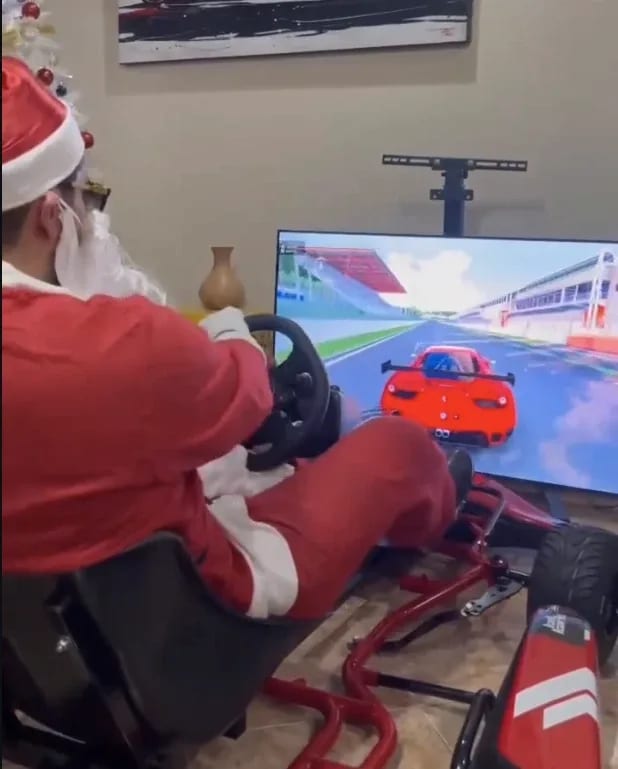
A kart simulator with realistic physics on real Brazilian tracks, built on a real kart and spread across venues.

  • Simulator
  • Hardware
  • Monetization
  • UX
Genre:
Kart Simulator
Scope:
Project Lead · Level Design · Monetization · UX/UI
Development Time:
1 Month
Team Size:
2
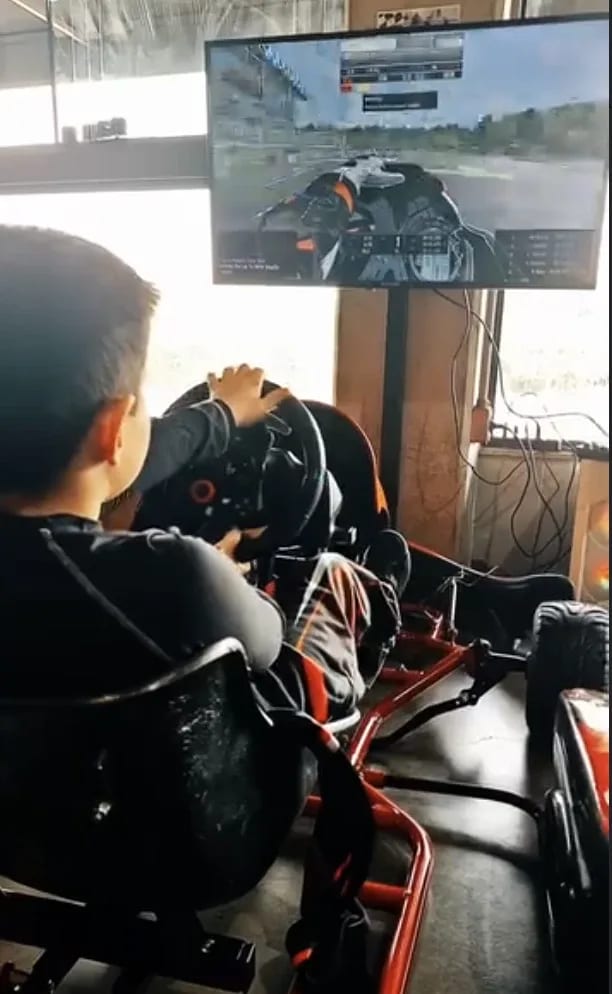
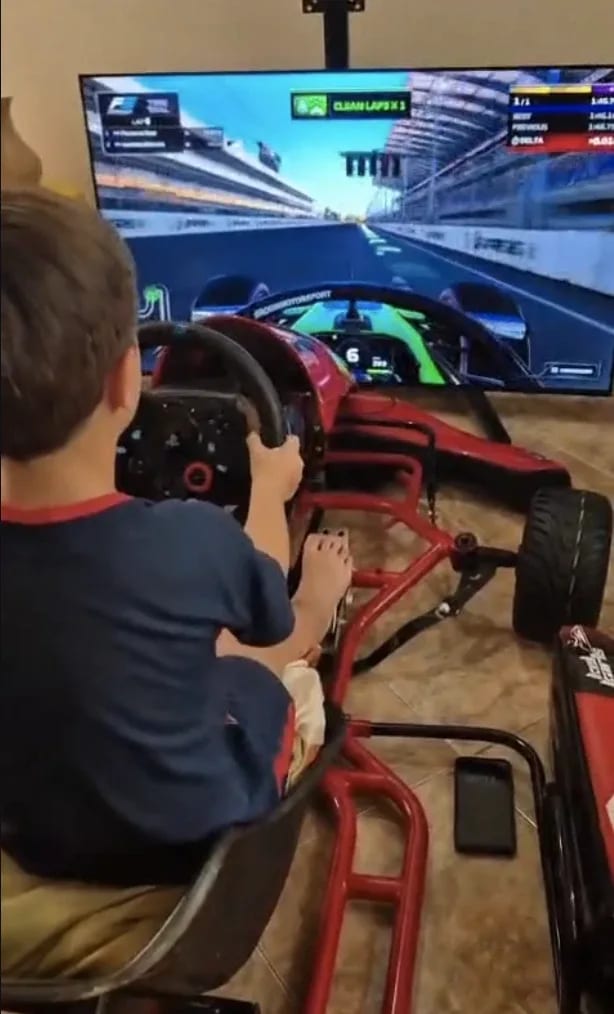
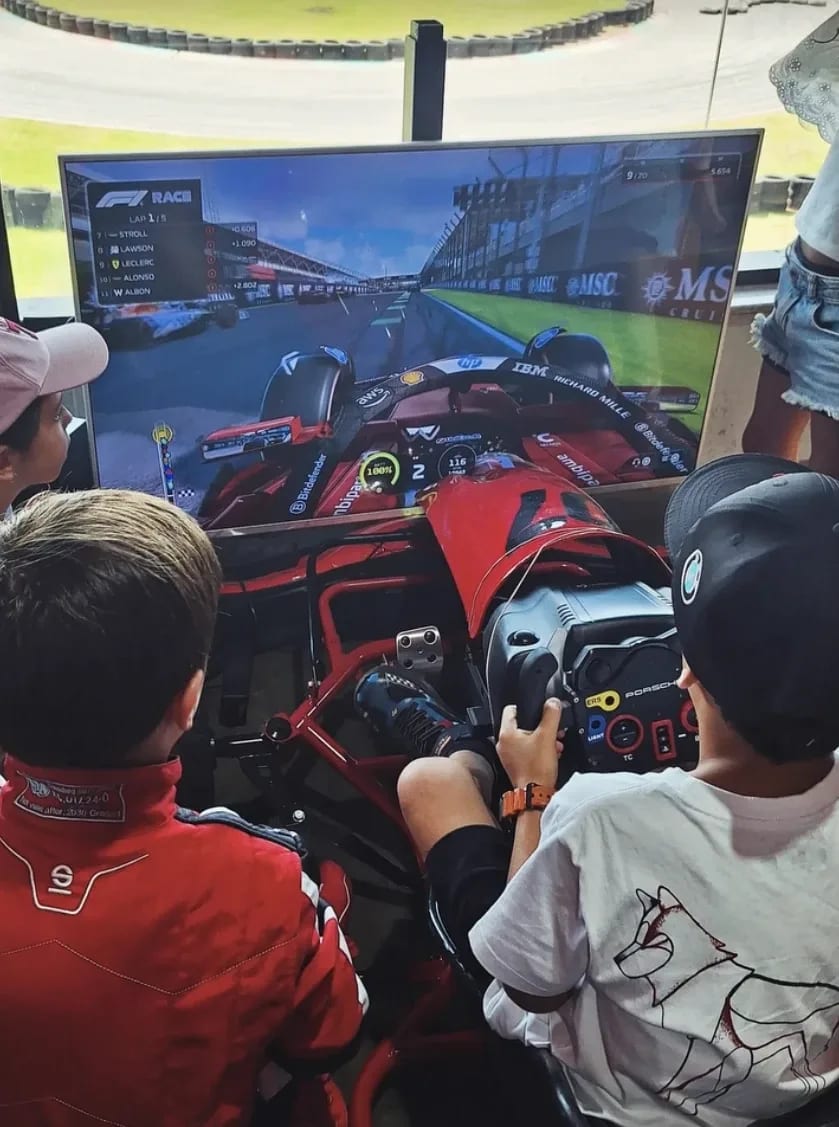
Two children at the kart simulator in front of a screen, at a kart track

Project Resume

Project resume

01

Overview

A kart simulator with realistic physics on about ten real Brazilian tracks, built on a real kart and placed in kart tracks, restaurants and shops, with an app for lap times and tokens.

  • Platform Simulator · Mobile App
  • Team Size
  • Duration
  • Engine

Key Features

  • A real kart turned into a simulator
  • About ten tracks based on real Brazilian circuits
  • Physics made for real training
  • An app for lap times, profile and tokens
  • Free for venues, paid by token per driver
  • In kart tracks, restaurants, shops and homes

My Role

Project Lead & Game Designer

Led the project with a partner from karting, designed the business model and the UX, and built the tracks to match the real ones.

  • Designed the monetization and business model
  • Built and textured the tracks of the simulator
  • Designed the UI and UX of simulator and app
  • Level Design
  • Monetization
  • UX/UI
  • Business Model
  • Post-Processing
  • Pitching
02

Design Brief

Training in karting is expensive and hard. Drivers have to rent a track, close it for practice and hope the weather helps, and many of them wanted to train at home. With a partner who ran a kart track and knew the sport, my studio built a kart simulator with realistic physics, where the partner defined what the simulator should be and we defined how to build it.

Constraints

  • Costly practiceRenting and closing a whole track made every training session expensive.
  • The weatherBad weather often got in the way of practice on the real tracks outdoors.
  • Train at homeDrivers wanted to practice without going to the track.
  • Real physicsA simulator made for training had to drive just like a real kart does.
03

Design Goal

The simulator had to drive like a real kart on tracks people knew, so training on it meant something. It also had to make money for everyone involved, spread across many places at once, and keep each driver's progress in one profile they could take from one simulator to the next one.

From the token to the lap time

Buy. Race. Improve.

  1. BuyGet a token in the app or at the venue itself.
  2. RaceDrive a real track with the physics of a kart.
  3. ImproveTrack your lap times on any of our simulators.

Player Experience Pillars

  • Real tracksCircuits drivers already know.
  • Real physicsTraining that means something.
  • Venue freeDrivers pay per token.
  • EverywhereTracks, shops and homes.
  • One profileLap times in one app.
04

Design Solution

We bought a real kart and turned it into the simulator, and I built about ten tracks based on real Brazilian circuits, from the layout and textures to the post-processing, as close to the originals as possible. I designed the business model, free for each venue with a share of every token drivers buy, and the UI and UX of both the simulator and the app, where drivers buy tokens, keep a profile and track their lap times on every simulator they drive.

Key Design Choices

  • Real tracksBuilt about ten tracks from real Brazilian circuits, each layout as close as possible to the original.
  • A real kartTurned a real kart into the simulator, from the welding to the bodywork, so it felt like the real thing.
  • Token modelFree for the venue, with the studio earning a share of every token drivers buy.
  • One appAn app to buy tokens, keep a profile and track lap times on any of our simulators across the whole country.
  • Many venuesPlaced in kart tracks, restaurants, shops and markets, and sold to drivers for their homes.
05

World & Visual Identity

Real Brazilian kart circuits rebuilt for a simulator, with textures and post-processing tuned to look like the tracks drivers race on, in a real kart body placed wherever people meet, from kart tracks to restaurants and shops.

Visual Principles

  • Brazilian circuitsAbout ten tracks based on real ones.
  • True to the trackLayouts as close as possible to the originals.
  • A real kartWelded, rebodied and finished by the team.
  • Any venueKart tracks, restaurants, shops and homes.
  • Kids at the wheelChildren could drive a realistic kart.
06

Results & Learnings

Results

  • Ten real tracksBuilt about ten tracks based on real Brazilian circuits, with the level design, the textures and the post-processing as close as possible to the originals.
  • A model that paidDesigned a token model, free for venues and paid by drivers, and the project made good money across its venues.
  • Spread across BrazilPlaced about ten simulators in kart tracks, restaurants and shops, and sold units to drivers who wanted to train at home.

Learnings

  • Real tracks matterMatching real Brazilian circuits gave training on the simulator a meaning, since drivers practiced on the same tracks they already knew and raced on.
  • Design the businessThe token model was as much a part of the design as the tracks, since it decided where the simulator could go.
  • One product, two partsThe simulator and the app had to work as one experience, from buying a token at the venue to checking a lap time on the phone afterwards.

Media

The work, up close

Project gallery · 5
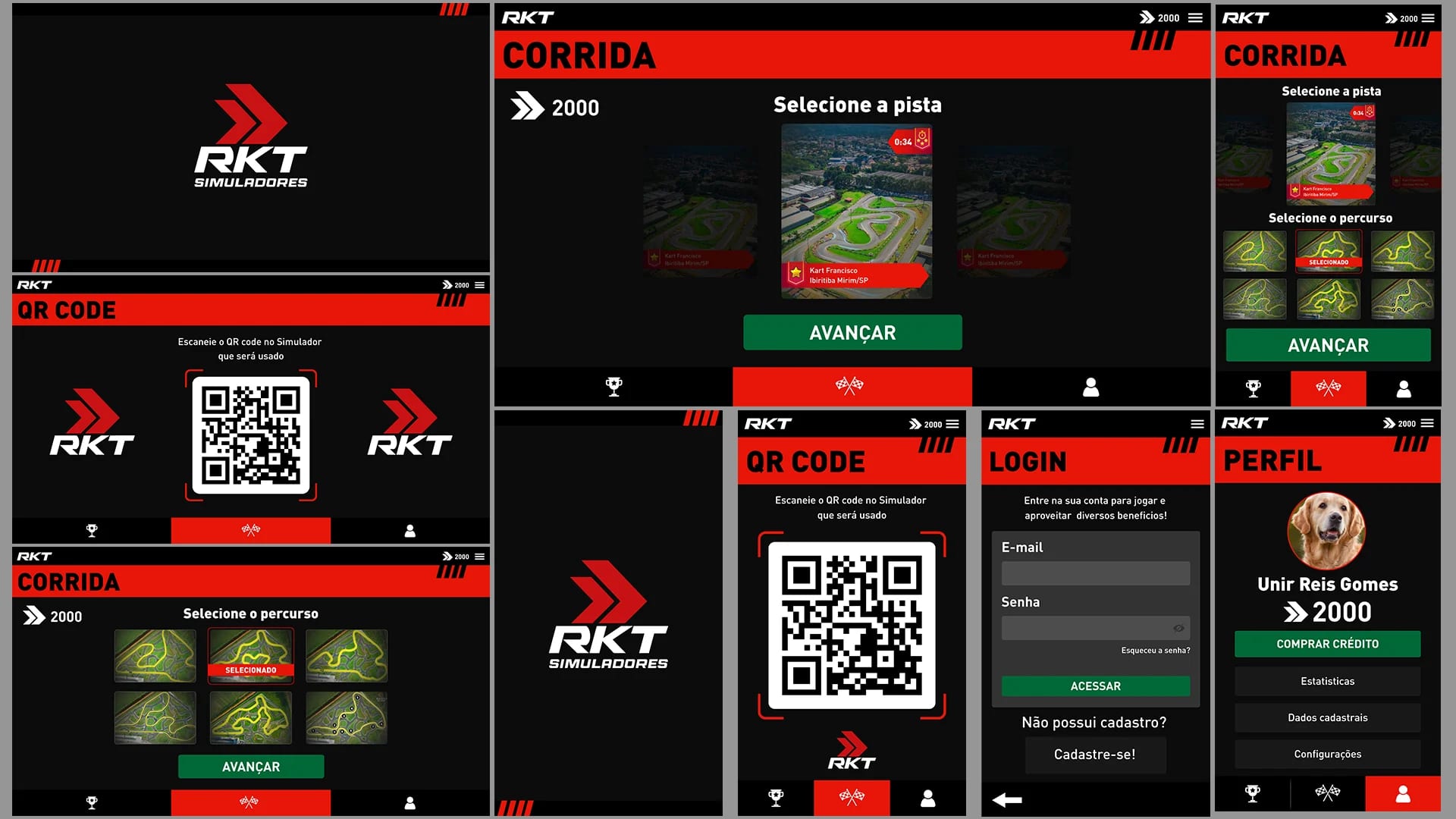
Several red and black app screens for the kart simulator

Simulator app

The app screens: login, track selection, QR code and profile.

Roles

Roles & Responsibilities

Project Lead

  • Led the project with a partner from the karting world
  • Presented the project to kart tracks as partners
  • Managed the partner's expectations along the way
  • Defined how the simulator would be built, from kart to software

Level Design

  • Built about ten tracks from real Brazilian circuits
  • Matched each track's layout as closely as possible
  • Painted the textures of every track of the simulator
  • Set the post-processing of every track to match reality

Business & Monetization

  • Designed the business model of the whole project
  • Made the simulator free for venues, paid by token
  • Set a share of every token sold as the studio's income
  • Planned the spread of simulators across the country

UX & UI

  • Designed all the UI and UX of the kart simulator
  • Designed the app for profile, tokens and lap times
  • Let drivers use any of our simulators in the country
  • Kept the simulator and the app as one experience

Full Case Study

RKT Simulator Case Study

The Simulator

Feature Introduction

A real kart on real tracks

Kart practice is costly and hard. A track has to be rented and closed, the weather does not always help, and drivers wanted to train at home, so the simulator was built for training first, with physics that drive just like a real kart.

I rebuilt about ten real Brazilian circuits for it, working on the layout, the level design, the textures and the post-processing of each one, so every curve and straight came as close as possible to the track drivers already race on, and the lines they learn on the simulator are the very same ones they use on the real circuit as well.

The seat is a real kart. We bought one and turned it into the simulator, from the welding to the bodywork and its finish, and I designed the user flows and the game feel around it, so a driver climbs into the same seat, holds the same wheel and feels a lap the way it feels on track, from a child on a first try to a regular racer.

Design Principles

  • Make every track feel like the circuit drivers know, so training on the simulator carries to the real track on the very next lap drivers make there
  • Keep the physics realistic, since the simulator was built for training first and for fun second, so every lap teaches something a driver can use on track
  • Use a real kart body, so drivers sit in the same seat and reach the same controls as they do on the real track, with the same body around them
  • Let children and newcomers drive a realistic kart safely, wherever the simulator stands, from tracks to shops, with none of the risks of a real track

Feature Breakdown

The simulator, in detail

01 Real TracksReal Brazilian kart circuits, rebuilt for training
01

Real Tracks

Real Brazilian kart circuits, rebuilt for training

Each track started from a real Brazilian kart circuit. I built its layout and level design as close as possible to the original, painted the textures of the asphalt and the surroundings and tuned the post-processing, so drivers recognize the circuit at a glance and the braking points they learn hold on the real track.

Function

Make every lap on the simulator count on the real circuit as well

Design Approach

Decisions made:

  • Rebuild about ten real Brazilian kart circuits as close as possible
  • Match the layout of every track to the circuit drivers already race on
  • Paint the textures of the asphalt and surroundings of each track
  • Tune the post-processing so each track reads like the real circuit

Player Impact

Allowed players to...

  • Train on the circuit they race on without renting or closing the track
  • Recognize their own track at a glance from the first lap they drive
  • Practice the same lines and braking points they use on the real track
  • Choose among about ten circuits to train on, wherever the kart stands
02 A Real KartA real kart turned into the simulator itself
02

A Real Kart

A real kart turned into the simulator itself

The simulator is a real kart. We bought one and rebuilt it as the machine, from the welding to the bodywork and its finish, so drivers sit in the seat they know and reach the same controls. The kart gave the realistic physics a body that matched it, and it let the simulator stand anywhere, from a kart track to a shop.

Function

Give the realistic physics a body drivers already know by heart

Design Approach

Decisions made:

  • Build the simulator on a real kart bought and rebuilt for the job
  • Keep the real seat, wheel and pedals so the controls feel familiar
  • Finish the bodywork so the simulator looks at home at any venue
  • Pair the real body with physics tuned to drive like a real kart

Player Impact

Allowed players to...

  • Sit in the same seat and reach the same controls as on the real track
  • Feel the weight and the response of a kart without risk on a track
  • Drive a realistic kart at a shop or a restaurant, even as a child
  • Carry the feel they build on the simulator straight to the real kart
03 Game Feel & UXUser flows and feel built around a real lap
03

Game Feel & UX

User flows and feel built around a real lap

I designed the whole UI and UX of the simulator, from choosing a track to the lap time at the end, and worked on the game feel so the sensation of driving matched a real kart. Every screen had to be quick for a driver in the seat and clear for a child in a shop, so a run starts in a few steps and ends with a time.

Function

Get any driver from the seat to a timed lap in a few quick steps

Design Approach

Decisions made:

  • Design the user flow from picking a track to seeing the lap time
  • Tune the game feel until driving matched the sensation of a real kart
  • Keep every screen readable from the seat, at a glance, mid-session
  • Make the flow simple enough for children and newcomers to follow

Player Impact

Allowed players to...

  • Start a timed lap in a few steps, right from the seat of the kart
  • Feel the sensation of a real kart from the very first corner they take
  • Read their lap time at the end of every run and try to beat it
  • Drive on their own, even for the first time, with no one to guide them

Behind the Feature

How the tracks were built

01 Real TracksReal circuits · Layout and braking points · Textures · Post-processing

Goal

Laps that carry over to the real circuit

  • Make every curve and straight match the circuit drivers already race on
  • Keep the braking points of each track true, so they hold on the real one
  • Make drivers recognize each circuit at a glance from the seat of the kart

Constraints

Training comes first and fun comes second

  • Keep the physics realistic, since the simulator was built for training
  • Rebuild about ten real circuits, each one as close as possible to the original
  • Read each track clearly on a screen right in front of a real kart seat

Process

  1. Traced from references Each track started from a real Brazilian kart circuit, with its layout traced from references so every curve and straight came as close as possible to the original, checked against photos of it.
  2. Level design for laps I worked the level design around the racing line, keeping the width, the curbs and the run-off where drivers expect them, so the line they learn holds on track.
  3. Braking references I painted the asphalt and the surroundings by hand, placing the marks, signs and objects drivers brake and turn on at the same spots as on the real circuit they race.
  4. Read from the seat The post-processing of each track was tuned from the kart seat, keeping the asphalt, the curbs and the distance ahead clear for a driver judging the next corner at full speed.

The decision that made it work

Keep the references drivers brake on

Drivers find their braking and turning points from what they see around the track, so the layout and the surroundings were matched to the real circuit. What a driver practices on the simulator lands on the very next real lap.

Result

Practice at home that counts on the track

Drivers recognized each circuit at a glance and trained the same lines and braking points they use on the real track, with no track to rent and no weather to wait for, training from home, from a shop or right at the kart track.

Business & App

Feature Introduction

A simulator that pays for itself

A venue would rarely buy a simulator up front, so the model had to let it pay for itself. I designed the business model and all of the monetization around that, with two ways for a venue to take the simulator in and a share of every token for us.

The app carried the driver side of the design. Drivers kept a profile, bought tokens and followed their lap times there, and I designed its UI and UX together with the simulator, so buying a token at the venue and checking a lap time on the phone felt like one single experience, with every lap time saved to the same driver profile.

The simulators went to kart tracks and also to restaurants, shops and markets, and some were sold to drivers who wanted to train at home. Several kart tracks bought them, above all in the state of São Paulo, and the project made good money for everyone in it, even though the national network we planned never launched.

Design Principles

  • Earn from every venue through a share of each token, so a venue can run the simulator without buying it and still profit from each driver
  • Keep one profile per driver, so every lap time is saved and each driver's progress follows them to any one of the simulators they drive
  • Place the simulator wherever people gather, from kart tracks to restaurants, shops, markets and even the homes of drivers who wanted to train
  • Design the simulator and the app as one experience, from buying a token at the venue to checking the lap time in the app on their phone

Business Model

Two ways into a venue

  • Own it

    Buy or rent the simulator

    A venue that wanted the simulator as its own could buy or rent the equipment and run it as part of its business, charging drivers by the token or giving laps away to bring people in, with every choice of price left to the venue itself.

  • Pay per token

    Free for the venue

    A venue could also take the simulator for free and charge drivers by the token, with Seeliefy keeping a share of every token sold, so the simulator paid for itself through the people who drove it and the venue took no risk to have one.

Leading the Project

Feature Introduction

Leading a partnership

RKT Simulator was a partnership between Seeliefy and a company from karting. The partner ran a kart track and knew the sport and its people, so they defined what the project should be, and we defined how to build it from there.

I led the project from our side, close to a project manager on top of the design work. I wrote the game's documentation, gave the programmer the art direction to apply, and kept the partner's expectations aligned with what the team could build at every step, so decisions moved fast between a studio and a company of racers.

I also took the project to the market. I made several pitch decks and presented them to kart tracks, showing how a track would earn, how the partners would earn and how the partnership would work, and I met with investors, so the business model I designed was the same story every venue and investor heard from us.

Design Principles

  • The partner from karting decides what the simulator should be and the studio decides how to build it, so each side leads where it knows best
  • Every pitch shows each side what it earns, the track, the partners and the investors, so every deal starts from a shared picture of the business
  • The documentation and the art direction come before the build, so the programmer always knows what to make and how it should look on screen
  • Expectations are checked with the partner at every step, so the partnership never drifts away from what the small team can actually deliver

Development

Development

Tracks, Kart & App

Conclusion

Conclusion

A child at the wheel of the kart simulator by a window at a kart track
A child driving the kart simulator in a living room

Design Conclusions

RKT Simulator turned a real kart into a simulator for about ten real Brazilian tracks. I led the project with a partner from karting, built the tracks, designed the UI and UX of the simulator and the app, and the token model that paid for it.

The biggest design calls sat outside the game. Where the simulator could stand, how drivers paid and how their lap times followed them were design decisions as much as any track, and they decided whether the simulator reached the drivers it was built for.

Design Takeaways

  • Build on a real kart

    Turning a real kart into the simulator gave drivers the seat and the controls they already knew, so the realistic physics had a body that matched it on each of the ten real tracks.

  • Plan where it stands

    Kart tracks, restaurants, shops and homes each asked something different of the simulator, so where it would stand became part of the design from the very first version.

  • Lead with a partner

    A partner from karting defined what the simulator should be and we defined how to build it, and keeping both sides aligned at every step was what moved the project forward.

Next project

Rock in Rio Coaster