Back to Projects
Project 14 / 15

Project 14 · Simulator

Ibira Hang Glider

A VR hang-glider simulator over a digital twin of Parque Ibirapuera, flown on a physical rig inside the real park.

  • VR
  • Simulator
  • Digital Twin
  • Level Design
Genre:
VR Hang-Glider Simulator
Scope:
Level Design · 3D Modeling · UX/UI · Post-Processing
Development Time:
2 Weeks
Team Size:
3
Tools:
Unity
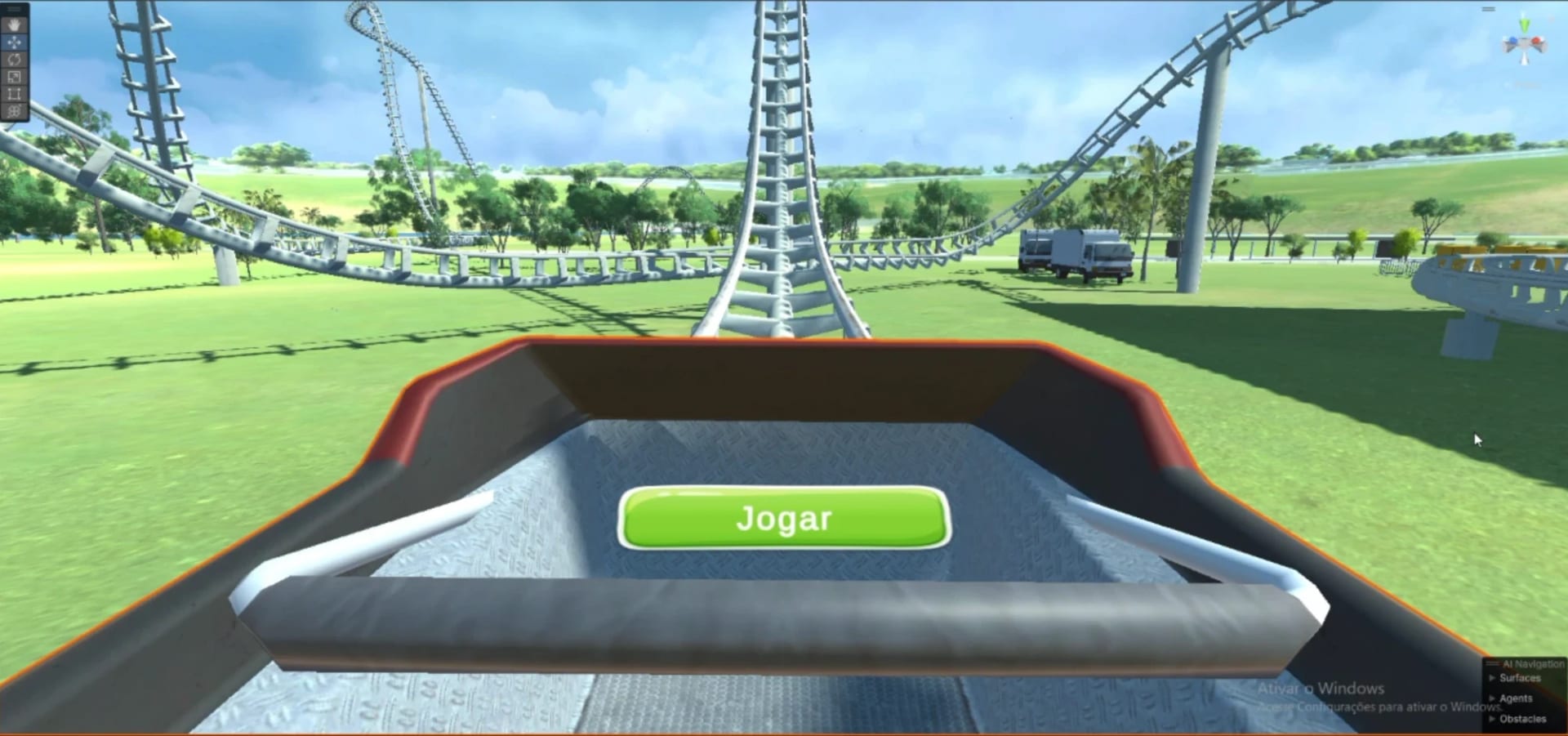
A first-person view from a roller coaster cart over a green park, with a Play button

Project Resume

Project resume

01

Overview

A VR hang-glider simulator over a digital twin of São Paulo's Parque Ibirapuera, flown on a physical rig in a brand activation set up inside the real park.

  • Platform VR · Hang-Glider Rig
  • Team Size 3
  • Duration 2 Weeks
  • Engine Unity

Key Features

  • A VR flight on a physical hang-glider rig
  • A digital twin of Parque Ibirapuera, light enough for VR
  • A route of arches in the sky to follow
  • Crowds walking the park's paths on waypoints
  • Shows with crowds jumping in front of the stage
  • Exhibited inside the real Parque Ibirapuera

My Role

Level Designer & 3D Artist

Rebuilt the park as a light digital twin for VR, designed the arch route, the crowd paths and the UI and UX, and tuned the post-processing.

  • Rebuilt the park in 3D for VR
  • Designed the arch route and crowd paths
  • Tuned the post-processing and the UI
  • Level Design
  • 3D Modeling
  • UX/UI
  • Post-Processing
  • VR
  • Optimization
02

Design Brief

Ibira was a VR hang-glider simulator for a brand activation set up for a time inside Parque Ibirapuera, one of the best-known parks in São Paulo. Visitors climbed onto a physical hang glider, put on the headset and flew over a rebuilt version of the same park around them. A team of three had two weeks, and the park had to look beautiful and real in VR while staying light enough to run smoothly.

Constraints

  • A real parkVisitors flew over the same park they were standing in.
  • Two weeksA team of three had two weeks for the whole flight.
  • Light for VRThe whole park had to run smoothly in the headset.
  • RealisticThe park, its people and its shows had to feel real.
03

Design Goal

The park had to be beautiful, light and as realistic as possible at once. Visitors flew over the place they stood in, so the digital twin had to read as Ibirapuera from the air, with people and shows that made it feel alive, and every detail had to be weighed against how smoothly the flight runs in VR. Arches had to guide the flight without breaking the feeling of gliding.

From the rig to the sky

Climb. Glide. Pass.

  1. ClimbClimb onto the hang glider and put on VR.
  2. GlideGlide over the digital twin of the park in VR.
  3. PassFly through the arches to follow the route.

Player Experience Pillars

  • BeautifulA view worth the whole flight.
  • LightSmooth in VR from start to end.
  • RealisticLight and colors of the real park.
  • AliveCrowds and shows across the park.
  • GuidedArches that set the route.
04

Design Solution

We rebuilt Parque Ibirapuera as a digital twin made to fit in VR, and I designed the level around a route of arches in the sky that leads each flight over the park. To make the park feel alive and stay light, we built a crowd system where people walk on waypoints I connected along the park's paths, with crowds jumping at the shows. I modeled the park in 3D, tuned the post-processing for a realistic look and designed the UI and UX of the flight.

Key Design Choices

  • A digital twinRebuilt the park in 3D as a digital twin light enough to fly in VR.
  • Arch routePlaced arches in the sky so each flight follows a course over the park.
  • Light crowdsConnected waypoints along the paths so people walk naturally.
  • Post-processingTuned the light and colors so the park looks both real and beautiful.
  • UI and UXDesigned an interface that stays clear inside the VR headset.
05

World & Visual Identity

Parque Ibirapuera rebuilt as a digital twin and seen from a hang glider, with people walking its paths, crowds jumping at its shows and light tuned to look real. Visitors flew over the same park they stood in.

Visual Principles

  • IbirapueraA digital twin of the real park.
  • From the airThe park seen from a hang glider.
  • PeopleCrowds walking the park's paths.
  • ShowsCrowds jumping in front of stages.
  • ArchesA route drawn in the sky.
06

Results & Learnings

Results

  • A park for VRRebuilt Ibirapuera as a digital twin light enough for VR, with the 3D, the light and the post-processing tuned to look real.
  • A route in the skyDesigned the whole flight around a route of arches, and connected the waypoints that let crowds walk through the park and gather in front of its shows.
  • Shown in the real parkDelivered in two weeks with a team of three, and shown on a physical hang glider inside the real Parque Ibirapuera.

Learnings

  • Realism has a budgetEvery detail added to look real costs performance in VR, so realism became a choice of where to spend detail, on what visitors see most from the air.
  • Crowds make it realPeople walking the paths and crowds at the shows made the park feel real more than any extra detail on the models.
  • Known places set the barVisitors flew over the park they were standing in, so the twin had to be recognizable from the air before any other detail could matter.

Media

The work, up close

Project gallery · 2

Roles

Roles & Responsibilities

Level Design

  • Designed the flight as a route of arches over the park
  • Connected the crowd waypoints along the park's paths
  • Chose where the park needed detail and where to simplify
  • Shaped the level for how the park reads from the air

3D Modeling

  • Built the 3D models of the park's digital twin for VR
  • Shaped each model for how it reads from the hang glider
  • Kept the models light enough for a smooth, steady flight
  • Matched the park as closely as possible to the real one

Post-Processing

  • Tuned the post-processing of the whole flight experience
  • Brought the light and colors closer to the real park
  • Made the view of the park beautiful from the air
  • Balanced every effect against the performance budget

UX & UI

  • Designed the UI of the VR hang-glider simulator
  • Designed the UX of the whole flight, start to end
  • Kept the interface clear and out of the way of the view
  • Built every element to support the flight over the park

Full Case Study

Ibira Hang Glider Case Study

The Flight

Feature Introduction

A flight over a real park

Visitors climbed onto a physical hang glider, put on a VR headset and flew over the same Parque Ibirapuera where the simulator stood, so the park they had just walked through on foot became the view spread out below their wings.

I designed the flight as a route of arches in the sky. Each arch leads to the next one over the park, so visitors always know where to go next, and the route carries them across the whole park and past its best views without needing any instructions at all, even for people who had never worn a VR headset before in their life.

I designed the UI and UX of the flight for a headset worn on a physical rig, keeping the interface clear and light so attention stays on the view and on the next arch. In VR the park itself is the reward, so every element on screen was built to support the flight and never to compete with the view of the park spread below.

Design Principles

  • Use arches in the sky to set the route, so visitors always see where to fly next without needing any instructions or a map in the headset
  • Let visitors fly over the same park they stand in, so the digital twin is recognized from the air at first sight, a park they had just walked through on foot
  • Keep the interface clear and light in the headset, so the view and the next arch stay at the center of the flight while the arches lead the way
  • Keep the whole flight smooth in VR, since any drop in performance breaks the feeling of gliding over the park on a physical hang glider

Impact

What the design changes in the flight

  • Always a Way

    The next arch is always in sight, so visitors follow the route by instinct and never stop to wonder where to fly next.

  • A Familiar Place

    Visitors fly over the park they are standing in, so they spend the flight spotting places they already know from the ground.

  • A Smooth Flight

    Detail sits where visitors look, so the scene stays light and the flight runs smoothly without breaking the sense of flying.

  • Eyes on the View

    A clear, light interface keeps every eye on the park below, so the view stays the reward of the whole flight from the first second.

The Digital Twin

Feature Introduction

A digital twin full of people

We rebuilt Parque Ibirapuera as a digital twin of the real park, light enough to run the whole park inside a VR headset on the rig, so visitors could recognize the lake, the paths and the buildings they knew from the air above them.

We built a crowd system made to stay light. I connected waypoints along the roads and paths of the park, so people walk through it naturally, in every direction, and the park looks busy from the air without weighing on the flight or costing the frames the headset needs to stay smooth for every visitor on the rig.

The park also has shows, with crowds jumping and moving in front of the stage. Seen from the hang glider, these moments give visitors something alive to look down at as they pass over them, and they make the digital twin feel like the real park on a busy day full of people instead of an empty model of the park.

Design Principles

  • Rebuild the park as a digital twin light enough for VR, so the whole of Ibirapuera fits in a single flight at a steady frame rate in the headset
  • Fill the paths with people walking on connected waypoints, so the park moves naturally under the hang glider, as it does on a busy day
  • Keep the crowd system light, so a busy park never costs the flight its smoothness inside the VR headset, even with people on every path below
  • Bring the shows to life with crowds jumping in front of the stage, so something is always happening below the hang glider, wherever visitors look

Behind the Feature

How the crowd was built

01 Light Crowd SystemWaypoint network · Paths in every direction · Stage crowds · VR budget

Goal

A busy park that costs no frames

  • Fill the paths of the park with people walking naturally in every direction
  • Make the shows feel alive from the air, with crowds jumping at the stage
  • Make the digital twin look like the real park on a busy day full of people

Constraints

VR on a physical rig, at a steady frame rate

  • Keep the frame rate steady in a headset, where any drop breaks the flight
  • Read the crowd from high above the park, where close detail matters little
  • Fit the whole park and its people into one smooth flight over Ibirapuera

Process

  1. A waypoint network I connected waypoints along the roads and paths of the park, following the real park's map, so people walk on routes that branch and cross the way visitors do, denser near busy spots.
  2. Random next waypoint Each walker picks its next waypoint as it goes, so people spread in every direction and the paths never show a loop or a line of people walking in step from above.
  3. Crowds at the stages In front of the stages the crowds jump and move to the shows as groups, giving visitors something alive to look down at as the hang glider passes over them.
  4. Profiled in the headset I profiled the crowd in the headset while flying the full route and kept each walker simple, since from the air the movement matters far more than detail, and the frame rate held all flight.

The decision that made it work

Spend the budget on movement, seen from above

From a hang glider the crowd is seen from high above, so its life comes from how people move along the paths. Keeping each walker simple on waypoints let the park look busy while the whole flight stayed smooth in VR.

Result

A park that looked alive from the air

Visitors flew over paths full of people and over shows with jumping crowds, recognized the park they had just walked through, and the flight stayed smooth on the rig for every visitor of the activation in the park.

Feature Introduction

A park that looks real and runs light

The park had to look beautiful, run light and feel as real as possible at the same time, three goals that often pull against each other in VR, so every art choice I made in the park was also a choice about the performance of the flight.

I built the 3D models of the park for the flight, shaping each one for how it reads from the hang glider. Detail went where it shows from the air, and the models stayed simple enough to keep the whole park light in the scene for the headset.

I tuned the post-processing to bring the light and colors of the park closer to reality and make the view beautiful. It gave the scene much of its realism without adding any weight to the models, so the flight kept both its look and its speed, and the park inside the headset felt like the real one just outside the rig.

Design Principles

  • Look beautiful from the hang glider, so the view of the park is worth every second visitors spend in the air above a park they know well
  • Stay light enough to run smoothly, weighing every model and every effect against the performance of the flight, since VR has no room to spare
  • Feel as realistic as possible, with the light and the colors of the whole scene kept close to those of the real park that visitors stand in
  • Let post-processing carry part of the realism, so the models can stay simple and the whole scene stays light, while the view still feels real

Christmas Coaster

Feature Introduction

A Christmas ride in the same space

A first-person view from a roller coaster cart over a green park, with a Play button

For Christmas, the space in the park that held the hang glider received a second experience, a VR roller coaster on a physical simulator that moved with the ride, made by the same team of three in just two weeks of production.

I built the coaster from a roller coaster asset and laid the track within the forces a rider can take in VR, since some forces make people sick. The route runs through water, through a cave, and under and over a giant Santa, so the ride keeps changing its scenery while the motion of the seat stays comfortable all the way.

I modeled the giant Santa, the trees, the scenery around the track and the Christmas decorations hanging from it, set the LED and lighting colors for the night and timed the whole ride on the timeline, so the light, the scenery and every turn of the track arrive together for each rider who takes a seat on the coaster.

Design Principles

  • Keep every curve, climb and drop within what a rider can take in VR, so the ride thrills without making anyone sick, from the first climb to the last drop
  • Build the whole ride around the giant Santa, so the biggest piece of the scene is seen from below, around and above in one continuous ride
  • Theme every piece for a Christmas night, from the decorations on the track to the colors of the LED lights glowing around it in the dark
  • Move the physical simulator with the ride, so the body feels every climb and drop the eyes see inside the headset, as on a real roller coaster

Design Iterations

Design Iterations

01 The Coaster RouteThe Santa became the center of the ride

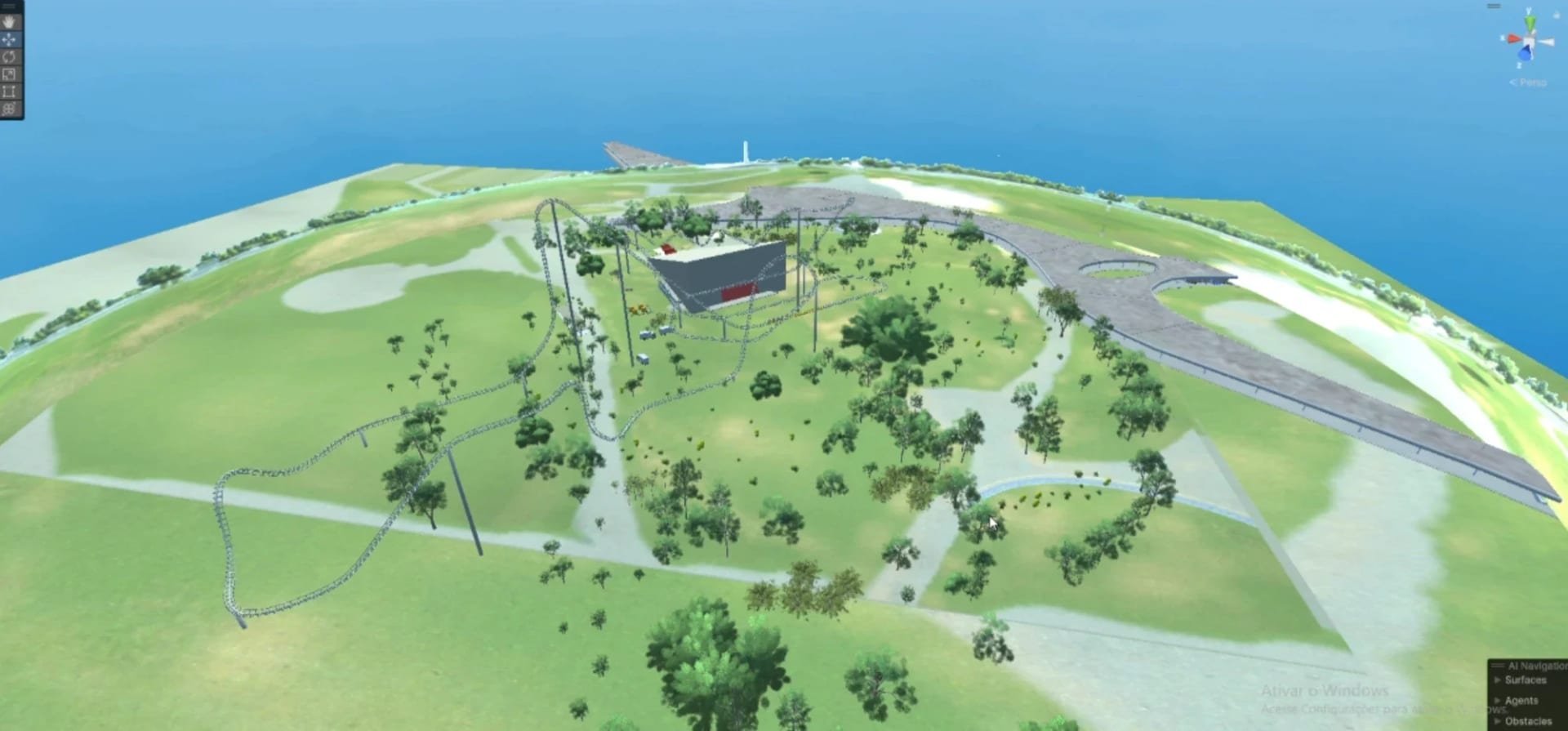
01 The Coaster Route

An aerial view of the park twin with a roller coaster track winding through the trees

Problem

The first track barely used the giant Santa

In the first versions, the coaster only passed under the legs of the giant Santa. The biggest piece of the Christmas scene went by in a single second, and the ride had no real build-up before its fastest drop down the track.

Cause

Comfort in VR limits the forces of a ride

A ride in VR can only use the forces that keep a rider comfortable, so the drama had to come from the route around the scene more than from steeper drops.

Solution

Rebuilt the track in tested sections around the Santa

In VR the drama comes from the route more than from the forces. Building the coaster in tested sections let each part of the track be judged on its own, until the giant Santa framed the climb and the climb finally paid off in the drop.

  • Build the track in sections, from the start to each of the loops
  • Close and test every section before moving on to the next one
  • Circle the giant Santa in a slow climb that sets up a fast drop

Result

The Santa became the center of the ride

The ride found its story. The biggest piece of the scene became the stage of the whole ride, seen from every side, and every thrill on the track stayed within the comfort that a ride in VR asks of its designer.

  • The ride showed the giant Santa from below, around and above
  • The slow climb around the Santa set up the fastest drop of the ride
  • The finished track came out of about twenty tested versions

Development

Development

Digital Twin, Route & Crowds

A first-person view from a roller coaster cart over a green park, with a Play button

Roller coaster, first person

The roller coaster version, from the seat of the cart.

Conclusion

Conclusion

Design Conclusions

Ibira put visitors on a physical hang glider, flying in VR over a digital twin of the same park they stood in. In two weeks and in a team of three, I built the park in 3D, designed the arch route, the crowd paths and the UI and UX, and tuned the post-processing of the whole park.

In VR, realism turned out to be a set of careful choices. Detail where visitors look, light and color doing part of the work of the models, people walking the paths and an interface that steps aside made the park feel real without weighing on the flight.

Design Takeaways

  • The route is the interface

    Arches in the sky carried visitors across the whole park without a word of instruction, so the route itself became the interface of the flight, from the first arch to the last one over the park.

  • Two weeks, one priority

    With a team of three and two weeks, every hour went to what visitors would see first from the air, and everything else stayed simple on purpose so the flight could open on time in the real park.

  • Light does the work

    Tuning the light and the colors did much of the work of detailed models, so the park looked real and beautiful from the air while the whole scene stayed light enough for VR.

Next project

Star Rush